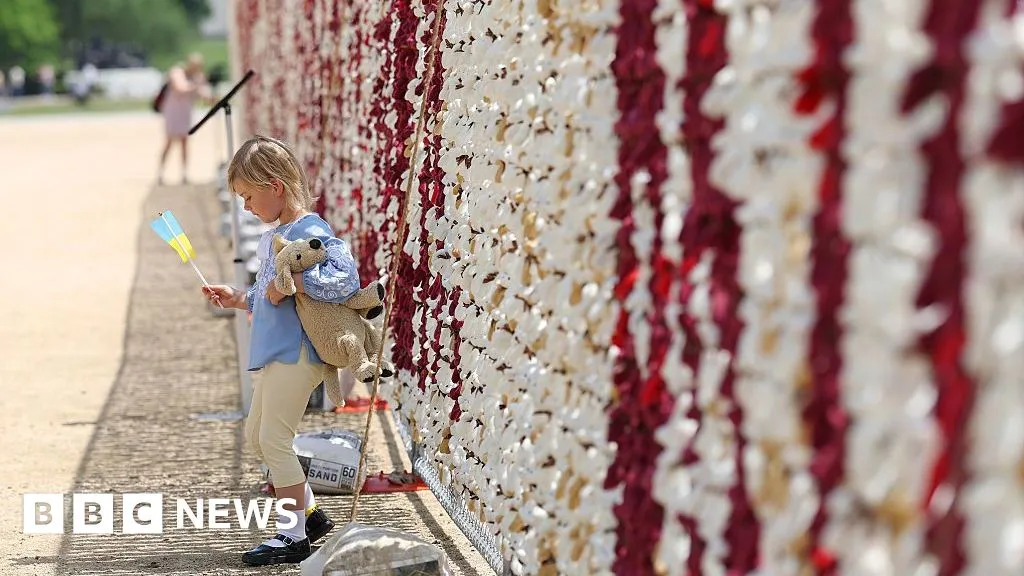
A striking installation of 20,000 teddy bears has been set up in Washington, DC, drawing attention to what Ukrainian officials describe as the mass abduction of Ukrainian children by Russian forces since the full-scale invasion began in February 2022.
Each bear in the display is intended to represent one child that Ukraine says has been taken to Russia, according to reporting by the BBC. The installation aims to put a tangible, visual scale on figures that can otherwise be difficult to comprehend.
Ukraine's claims and international response
Ukrainian authorities have long alleged that tens of thousands of children have been forcibly transferred to Russia or Russian-controlled territory during the conflict. The issue has drawn significant international attention, including from the International Criminal Court, which in March 2023 issued arrest warrants for Russian President Vladimir Putin and Russia's Commissioner for Children's Rights, Maria Lvova-Belova, specifically in connection with the alleged unlawful deportation of Ukrainian children.
Russia has disputed the characterization of these transfers as abductions, with officials describing some of the movements as evacuations from conflict zones for the children's protection.
A campaign for visibility
The Washington installation represents an effort by advocates to keep the issue prominent on the international stage, particularly in the United States, which has been a key provider of military and humanitarian aid to Ukraine.
The use of teddy bears as a symbolic device is designed to humanize statistics that might otherwise feel abstract to outside audiences. At 20,000 individual objects, the display forces observers to reckon with the claimed scale of the situation in a physical and immediate way.
Efforts to locate and return children identified as having been taken have faced significant logistical and political obstacles. Ukrainian officials and international organizations, including UNICEF, have called for unimpeded access to verify the whereabouts of affected children and facilitate reunifications with their families.
The conflict in Ukraine, now in its third year following Russia's large-scale invasion, has produced one of the most severe humanitarian crises in Europe since the Second World War, displacing millions of people and causing widespread civilian casualties. The fate of children caught up in the conflict has emerged as one of the most contested and emotionally charged dimensions of the ongoing war.