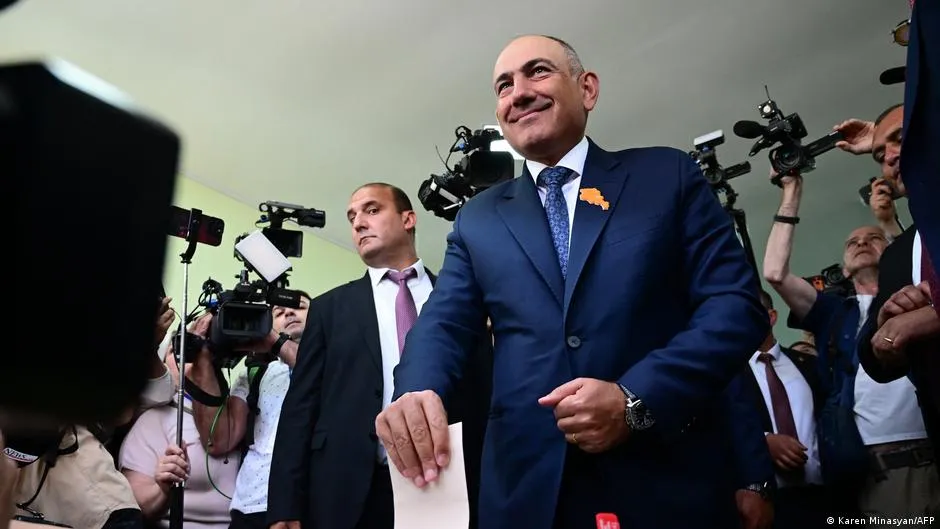
Armenia, a country roughly the size of Maryland that has somehow become one of the most geopolitically interesting places on Earth, is heading to the polls on June 7 for parliamentary elections that could reshape its future alliances. According to Deutsche Welle, what's really on the ballot isn't just political parties - it's the country's entire geopolitical soul.
From bear hug to awkward handshake
For decades, Armenia was one of Russia's most reliable partners in the post-Soviet space. They shared a military alliance, a common security organization (the CSTO), and a generally cozy relationship that made Western diplomats nervous. But that relationship has been visibly fraying.
The breaking point? Many analysts point to the 2023 Azerbaijani military offensive that resulted in Armenia losing Nagorno-Karabakh, a territory Armenians consider deeply tied to their national identity. Moscow, theoretically Armenia's security guarantor, did... not very much. That stung. Badly.
The slow EU flirt
Since then, Armenian Prime Minister Nikol Pashinyan's government has been quietly - and then not so quietly - making eyes at the European Union. Armenia applied for EU candidate status, suspended its participation in the CSTO, and has been hosting more Western officials than a Brussels networking event.
The June 7 vote is being widely watched as a referendum on whether ordinary Armenians actually want this westward shift, or whether they're skeptical of trading one big powerful neighbor's influence for another distant bureaucracy's embrace. According to DW's reporting, the election results will serve as a critical test of public opinion on this directional question.
What's actually at stake
- Whether Armenia accelerates or slows its EU integration path
- The future of Armenia's battered relationship with Russia
- How Yerevan handles its complex and tense situation with neighboring Azerbaijan and Turkey
- Domestic economic and governance questions that tend to get overshadowed by the geopolitics
The vibe check
Pashinyan's Civil Contract party is expected to face pressure from pro-Russian opposition parties who argue that abandoning Moscow is a dangerous gamble for a small, landlocked country with complicated neighbors on multiple borders. It's a legitimately difficult argument to dismiss, even if Russia's recent track record as a security partner has been underwhelming at best.
Regardless of your geopolitical priors, this is one of those elections worth paying attention to. Small countries making big choices have a way of mattering more than their size suggests.