
In what can only be described as a diplomatic middle finger wrapped in a ballot paper, Armenia's pro-Western Prime Minister Nikol Pashinyan has cruised to a commanding election victory - despite sustained pressure from his giant northern neighbor, Russia.
According to BBC reporting, Pashinyan's Civil Contract Party secured nearly 50% of the vote in the snap parliamentary elections, leaving rival parties - many of them considerably friendlier toward Moscow - scrambling for the scraps. By any measure, it was not a close race.
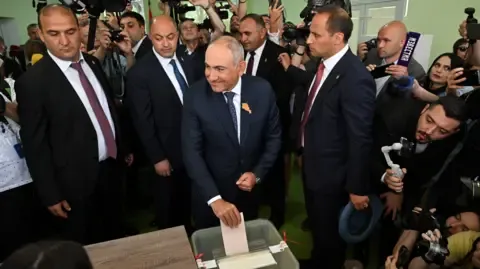
So what is actually going on here?
Armenia has been on one of the more dramatic geopolitical journeys of recent years. Once a firm member of Russia's orbit - and still formally part of the Moscow-led Collective Security Treaty Organization until very recently - the country has been visibly pivoting westward under Pashinyan's leadership. This has not exactly made for warm and cozy relations with the Kremlin.
The elections were seen as something of a referendum on that pivot. Voters were essentially asked: do you want to keep heading toward Europe and the West, or do you want to patch things up with Russia? The answer, delivered with nearly half of all votes cast, was pretty unambiguous.

Why does this matter beyond Armenia's borders?
Armenia is a small, landlocked country of about three million people sandwiched between Russia, Turkey, Iran, and Azerbaijan. Its foreign policy choices carry outsized symbolic weight. After the painful loss of Nagorno-Karabakh in 2023 - a defeat that many Armenians blamed partly on Russia's failure to defend them under its alliance commitments - public sentiment toward Moscow has soured considerably.
Pashinyan has leaned into that frustration, pursuing closer ties with the European Union and even beginning preliminary conversations about potential EU membership. For a country that not long ago seemed permanently locked into Russia's sphere of influence, that is a genuinely significant shift.

The opposition was not exactly thrilled
Pro-Russian and nationalist opposition parties had argued that Pashinyan's western tilt was reckless and that Armenia needed its traditional security relationships to survive in such a volatile neighborhood. Voters, at least this time around, did not buy that argument in large enough numbers to matter.
The result gives Pashinyan a fresh democratic mandate to continue his pivot - though governing a country in Armenia's geographic and strategic position with Russia still very much in the neighborhood is never going to be straightforward.
As reported by the BBC, the Civil Contract Party's strong performance ensures Pashinyan remains firmly in the driver's seat, for now. Whether that seat is comfortable is a separate question entirely.