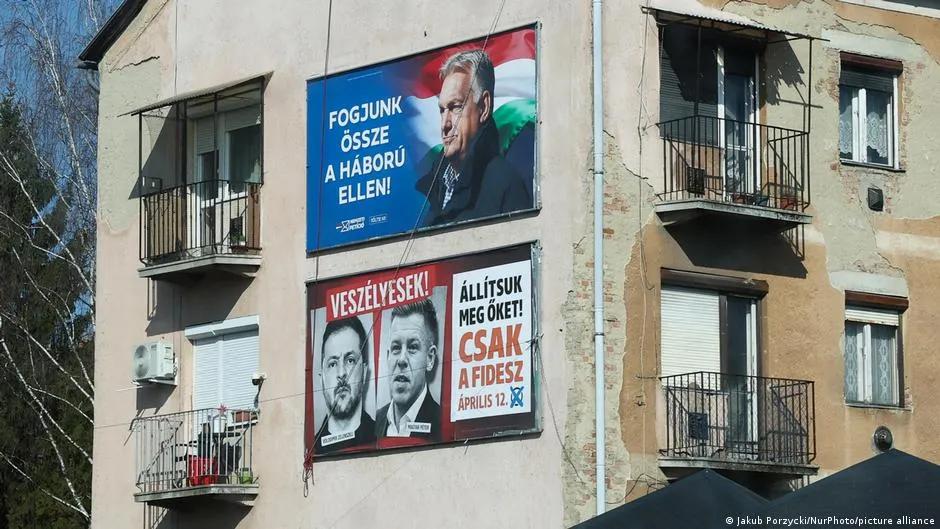
Hungary is heading into one of its most contested elections in more than three decades, with a wave of political scandals and a surge of misinformation reshaping the country's political landscape, according to a report by Deutsche Welle.
Analysts cited by DW describe the current atmosphere as the most fraught since the collapse of communist rule in 1989, pointing to an unusual confluence of factors that have unsettled both the long-dominant ruling party and an increasingly mobilized opposition.
Scandals on multiple fronts
A growing number of political controversies have drawn public attention in the lead-up to the vote. The scandals have touched figures across the political spectrum, complicating efforts by any single party to claim the moral high ground ahead of polling day.
Fake news and disinformation have also played a prominent role in the campaign environment, with competing claims circulating widely on social media and through partisan media channels. Observers say the volume and speed of false information has made it difficult for voters to distinguish verified facts from fabrication.
Opposition sees opening
For many Hungarians, the election represents a rare opportunity to challenge Prime Minister Viktor Orban's Fidesz party, which has held power since 2010 and has used that time to reshape the country's electoral and media systems in ways critics argue have entrenched its dominance.
The opposition, which has struggled to mount a unified challenge in previous cycles, appears more energized this time, according to DW's reporting. A sense of hope among some voters contrasts sharply with the fear reported by others - particularly among those who depend on state institutions or public employment and worry about potential repercussions for their political choices.
Broader implications
The outcome carries significance beyond Hungary's borders. As a European Union member state, Hungary's direction on issues including judicial independence, press freedom and relations with Russia has been closely watched by Brussels and Western capitals.
Orban's government has repeatedly clashed with EU institutions over rule-of-law concerns, and a change in government - or a reinforced mandate for Fidesz - would send a clear signal about the country's alignment within the broader European project.
Voting is expected to draw high turnout, with both supporters and critics of the current government describing the election as a defining moment for the country's democratic trajectory.