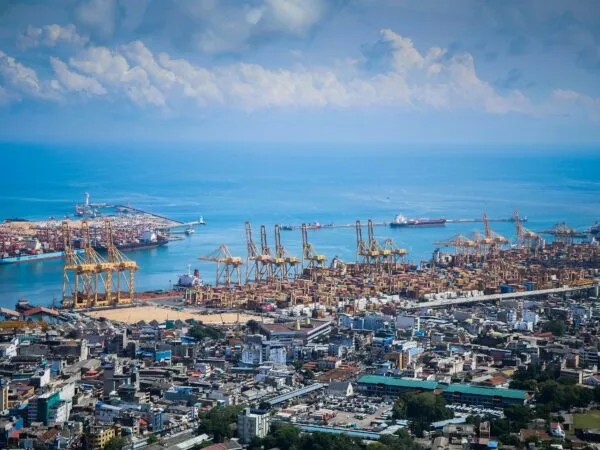
India is expanding its footprint in Sri Lankan ports and logistics infrastructure, mirroring a strategy previously associated with China in the region, according to a report by The Diplomat.
The shift reflects a broader competition for influence across the Indian Ocean, where financially struggling small states have struggled to maintain expensive maritime assets without outside support. That dynamic has created openings for larger powers willing to invest in exchange for strategic access.
A familiar playbook
China drew significant international attention over the past decade for acquiring stakes in Sri Lankan port infrastructure, most notably through a 99-year lease of the Hambantota Port in 2017 after Colombo was unable to service its debt obligations. Critics at the time described the arrangement as a textbook example of so-called "debt trap diplomacy," a characterization Beijing has consistently rejected.
Now, The Diplomat reports, India is pursuing a comparable approach - targeting distressed yards, ports, and logistics hubs in Sri Lanka and other small Indian Ocean states that cannot sustain the infrastructure independently.
Strategic stakes
The Indian Ocean is among the world's most critical maritime corridors, carrying a substantial share of global trade and energy shipments. Control over - or privileged access to - key ports along the route carries significant military and commercial implications.
For India, deepening its presence in Sri Lanka serves multiple objectives. It provides New Delhi with greater leverage in its immediate neighborhood, counters Chinese influence in a country that sits just off India's southern coastline, and advances India's broader ambitions to position itself as the dominant regional power in South Asia.
Sri Lanka, meanwhile, has been navigating a severe economic crisis following its 2022 default on foreign debt - the country's first in its post-independence history. The financial pressure has left Colombo with limited options and has made its strategic assets attractive to outside investors.
Regional implications
The emerging pattern raises questions about the terms under which smaller nations in the region are ceding control of critical infrastructure, and whether the involvement of a regional neighbor like India carries different implications than Chinese investment.
Analysts cited by The Diplomat note that the Indian Ocean has no shortage of distressed assets available to well-resourced powers willing to step in. As both India and China compete for influence, smaller states find themselves at the center of a geopolitical contest that often outpaces their capacity to navigate competing interests.
The situation in Sri Lanka is being watched closely as a potential indicator of how the broader competition for Indian Ocean influence will unfold in the coming years.