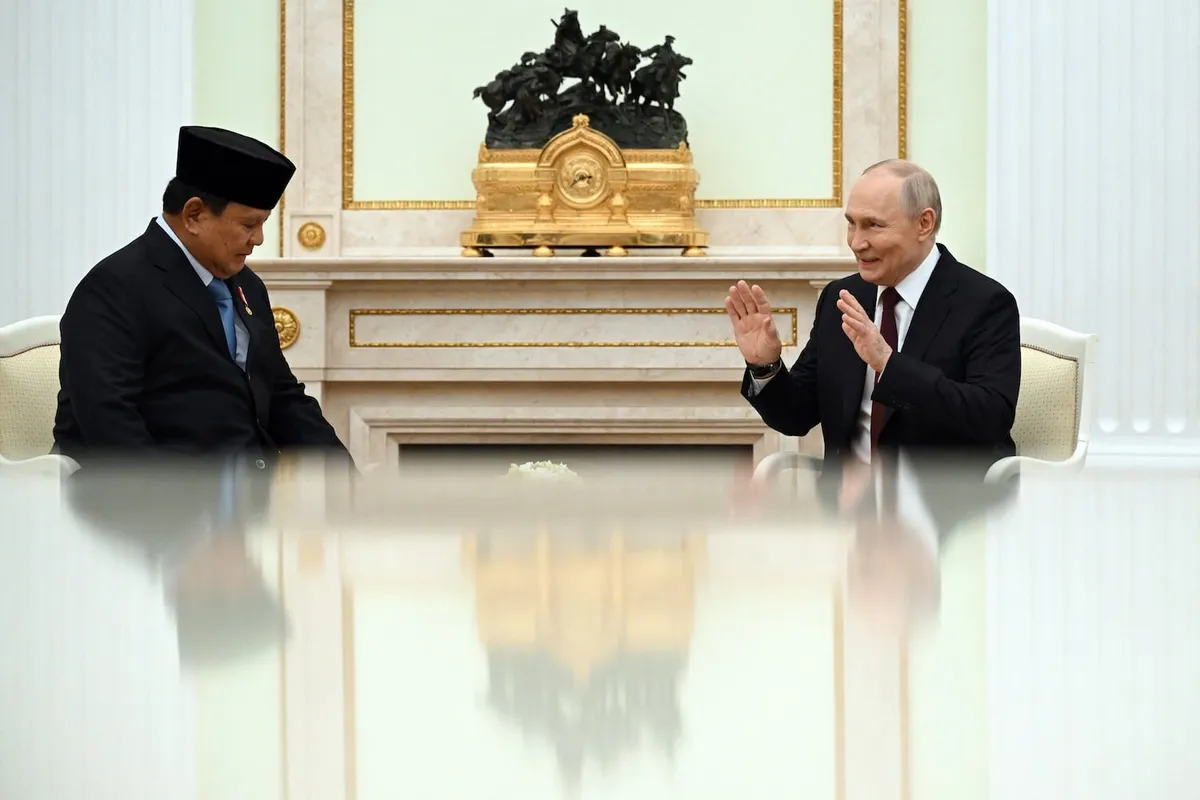
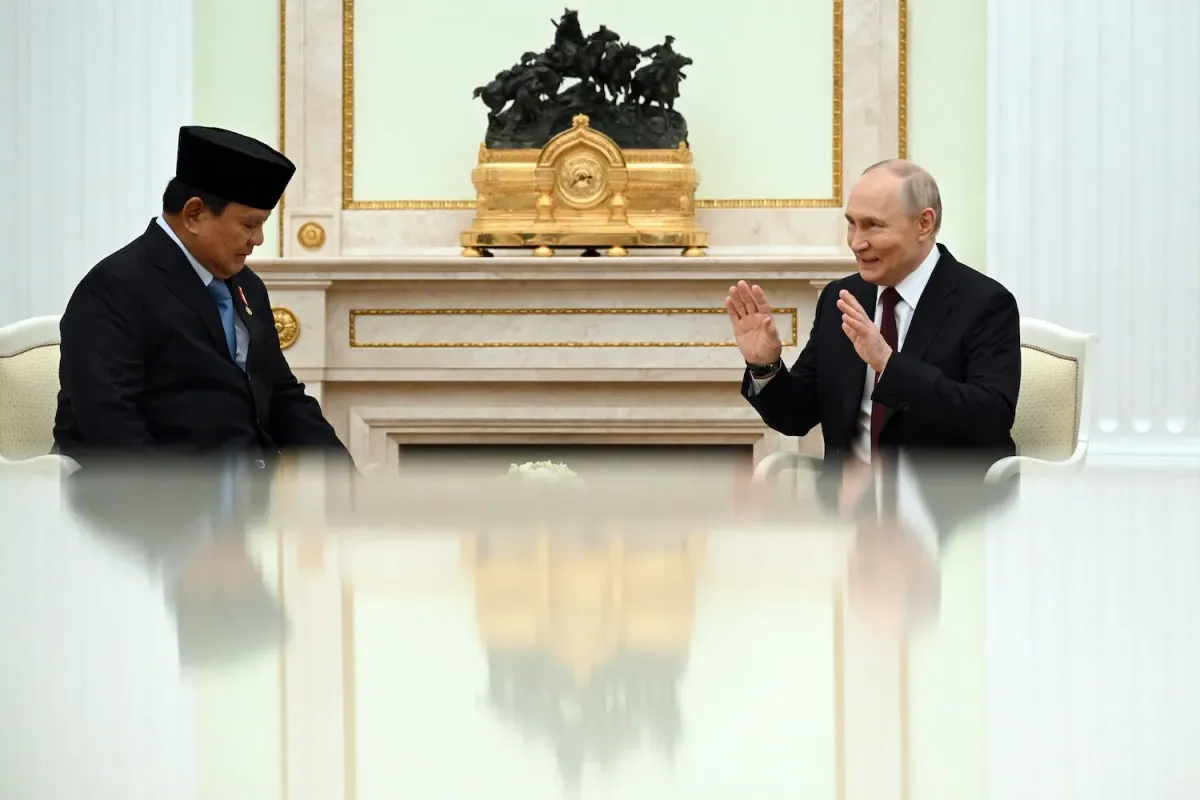
Indonesian President Prabowo Subianto has signaled his intention to pursue an independent foreign policy, visiting Moscow for talks with Russian President Vladimir Putin while also signing a defense cooperation agreement with the United States, according to a report by Foreign Policy.
The dual moves underscore Indonesia's long-standing principle of non-alignment, a posture sometimes described in Indonesian foreign policy circles as "bebas dan aktif" - free and active. Under this doctrine, Jakarta has historically avoided binding itself to any single great power bloc.
Balancing act between Washington and Moscow
Prabowo's visit to Russia comes at a sensitive moment in global geopolitics, with Western nations maintaining pressure on countries to distance themselves from Moscow over its ongoing war in Ukraine. Indonesia has repeatedly abstained from or softened its position on United Nations resolutions condemning Russia, drawing scrutiny from Western governments.
At the same time, the simultaneous signing of a defense agreement with the United States sends a signal that Jakarta is not pivoting away from its security relationships with Western partners. The details of the agreement were not fully disclosed in the Foreign Policy report, but such frameworks typically cover military training, equipment procurement, and intelligence-sharing provisions.

Prabowo's strategic calculus
Prabowo, a former military general who took office in October 2024, has positioned himself as a pragmatic leader focused on national interests rather than ideological alignment. His government has pursued arms and economic relationships with multiple competing powers, including China, Russia, and the United States.
Critics have argued this approach risks straining trust with Washington, which has grown increasingly wary of partners maintaining close ties with Moscow. Supporters of the approach contend that Indonesia, as the world's fourth most populous nation and a major emerging economy, is large enough to demand respect for its independent foreign policy choices.
Regional implications
Indonesia's moves are being watched closely across Southeast Asia, where several governments face similar pressure to choose sides in the intensifying rivalry between the United States and its adversaries. The Association of Southeast Asian Nations as a bloc has generally resisted calls to align explicitly with either Washington or Beijing and Moscow.
Prabowo's ability to maintain relationships on multiple fronts may serve as a template - or a cautionary tale - for smaller regional partners navigating the same terrain.
Foreign Policy described the situation as a form of "Russian roulette," suggesting that while Indonesia's balancing act may serve short-term interests, it carries significant risks depending on how great power tensions evolve.