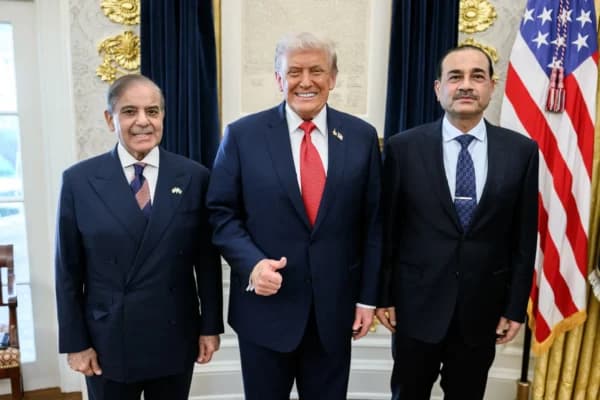
Pakistan played a pivotal role in facilitating a ceasefire between the United States and Iran, according to a report from The Diplomat, with Washington appearing to have stepped back from its longstanding objective of pursuing regime change in Tehran.
The development marks a notable turn in US foreign policy. Rather than continuing to push for the removal of Iran's government, American officials are now engaged in direct negotiations with the very political system they had previously sought to dismantle, the report indicates.
Pakistan's mediating role
Islamabad's involvement as a go-between reflects its longstanding position as a diplomatic bridge between Western powers and Muslim-majority nations in the region. Pakistan maintains relations with both Washington and Tehran, giving it a degree of access and credibility that few other countries can offer in this context.
The ceasefire arrangement, as described by The Diplomat, suggests that back-channel diplomacy conducted through Pakistani intermediaries helped bring the two sides to a point of de-escalation, even as their broader differences remain unresolved.
A shift in US posture
The willingness of the United States to negotiate directly with Iran's leadership represents a departure from the approach that has characterized much of Washington's Iran policy in recent years. Successive administrations had maintained pressure on Tehran through sanctions and political isolation, with some officials openly expressing support for political transformation inside Iran.
By entering into talks aimed at a ceasefire rather than continuing to demand systemic political change, the US appears to have recalibrated its short-term objectives, at least in the immediate diplomatic context, according to The Diplomat's analysis.
Regional implications
The ceasefire and Pakistan's role in securing it carry broader implications for the region. A reduction in US-Iran tensions could affect dynamics across the Middle East and South Asia, including ongoing conflicts and proxy disputes that have drawn in both countries.
Pakistan's emergence as a peacemaker in this context also elevates its international profile at a time when Islamabad has faced its own internal political instability and economic pressures. Successfully mediating between two major powers could strengthen its diplomatic standing.
The full terms of the ceasefire and the scope of ongoing negotiations between Washington and Tehran have not been fully detailed in publicly available sources. It remains unclear how durable the agreement will prove or whether it signals a broader realignment in US-Iran relations over the longer term.