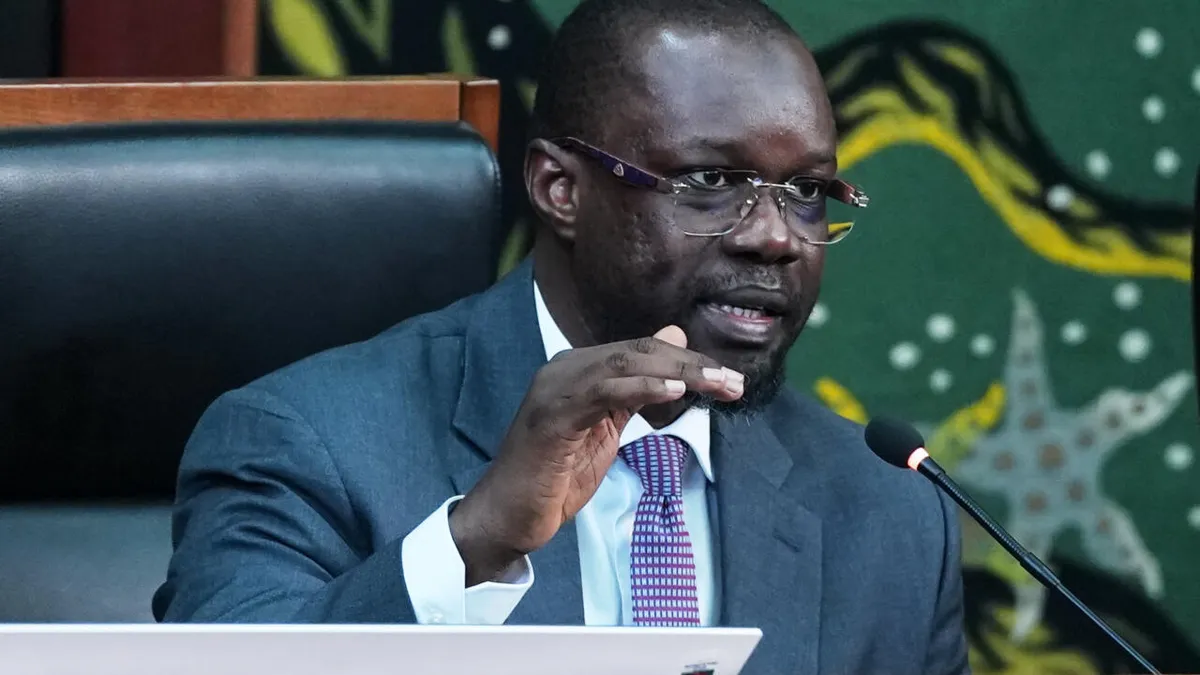
In a political development that absolutely nobody who has been following Senegalese politics could call boring, ousted Prime Minister Ousmane Sonko has announced that his party will not be participating in the country's new government. Per reporting by France 24, the firebrand politician is apparently taking his ball and going home - politically speaking.
So what actually happened?
Sonko, one of West Africa's most polarizing and high-profile opposition figures turned governing politician, was removed from the prime ministerial position and has now drawn a clear line in the sand. His party, Pastef (Patriots of Senegal for Work, Ethics and Fraternity), will sit this round out entirely when it comes to the new government's formation.
This is not exactly a man known for quiet exits. Sonko's political career has been a rollercoaster that would make a theme park designer jealous - featuring legal battles, mass protests by his supporters, prison stints, and a remarkable comeback that saw him become Prime Minister under President Bassirou Diomaye Faye after both men were released from detention ahead of Senegal's 2024 elections.
Why does this matter?
Senegal has long been held up as one of West Africa's more stable democracies, which makes every political shake-up there a big deal - not just domestically but for the region. When a former PM publicly announces his party is refusing to join the successor government, it signals a fairly significant fracture in the country's political landscape.
Sonko's support base is largely made up of young Senegalese voters who were energized by his anti-establishment, anti-corruption message. A clear break from the new government could mean those voters - and there are a lot of them - are being mobilized into opposition rather than governance.
What happens next?
Without Pastef's participation, the new government will need to cobble together a coalition or governing majority from other political forces. That is not impossible in Senegal's multi-party system, but it does make things considerably more complicated.
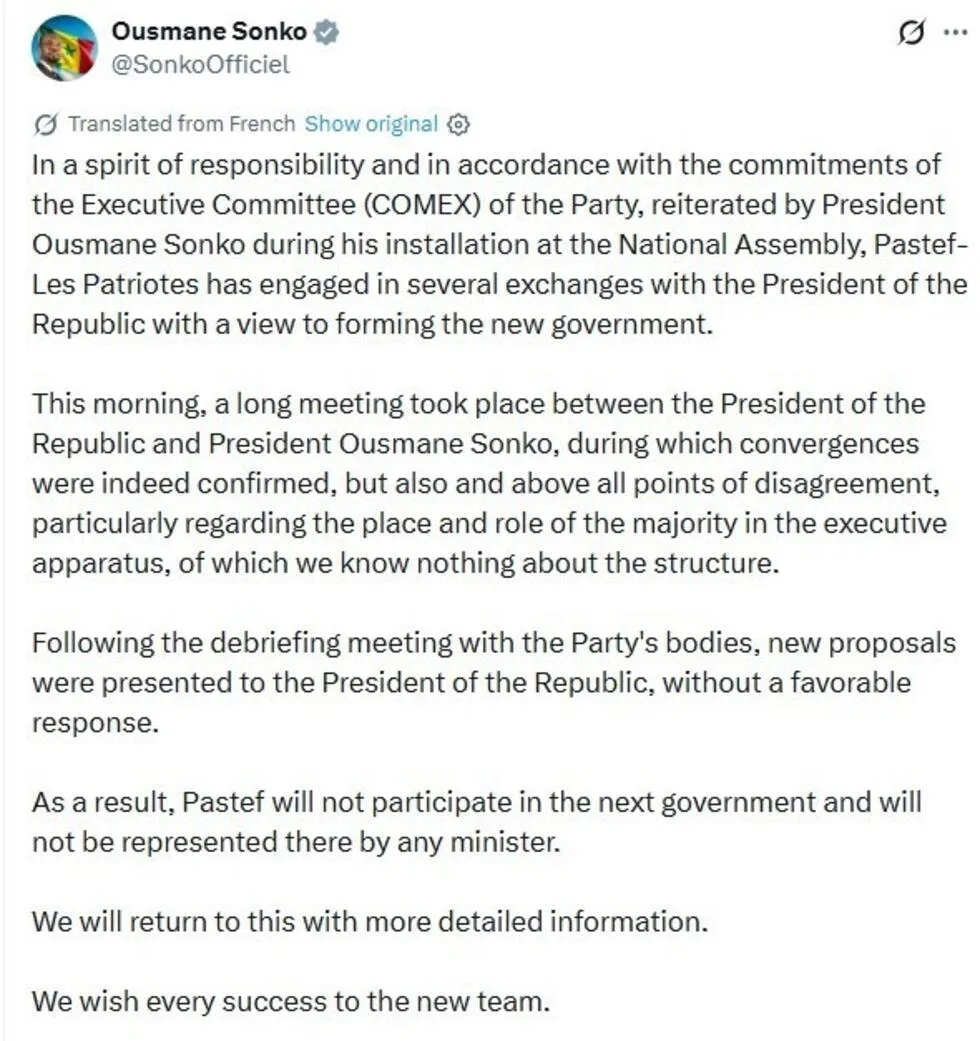
Sonko, for his part, appears to be positioning himself and his movement outside the tent - which in politics can sometimes be a very calculated place to be, especially if the new government stumbles.
As of publication, details on who will lead or form the new government remain limited. France 24 reported Sonko's statement but further specifics on the transition are still emerging.
Stay tuned - because if there is one thing Senegalese politics has proven lately, it is that nothing stays still for long.