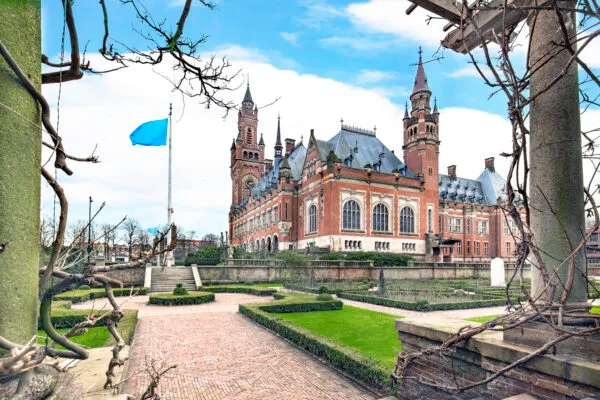
Here is a fun thought experiment: imagine you have been ethnically cleansed from your home, your village burned, your family scattered, and you are now living in one of the world's largest refugee camps. Then someone tells you, "great news - we are taking this to the International Court of Justice." Do you feel better? Maybe a little. Do you feel safe? Absolutely not.
That is essentially the situation facing over one million Rohingya refugees, and according to a new analysis published by The Diplomat, the gap between international legal accountability and actual, on-the-ground justice for the Rohingya is not just wide - it is cavernous.
What the ICJ can actually do
The International Court of Justice, the United Nations' primary judicial body, does have real powers. It can apportion legal responsibility to states, issue binding rulings, and formally declare that a genocide occurred - no small thing. The ongoing case against Myanmar, originally brought by The Gambia in 2019, represents one of the most significant uses of international humanitarian law in recent memory.
But here is where the optimism hits a brick wall. The ICJ cannot deploy peacekeepers. It cannot guarantee that Myanmar's military junta - which, let's remember, staged a coup in 2021 and has been fighting a multi-front civil war since - will comply with any ruling. It cannot physically escort refugees back to Rakhine State. And it definitely cannot undo years of systemic persecution that made the Rohingya stateless in the first place.
The enforcement problem nobody likes to talk about
International courts operate on a system that relies heavily on state cooperation and political will - two things that are, shall we say, not exactly abundant when it comes to Myanmar right now. The military junta has shown little interest in accountability, and the ongoing armed conflict inside Myanmar makes any notion of "safe return" for Rohingya refugees a distant hypothetical at best.
The Diplomat's analysis underscores a sobering reality: legal responsibility and practical safety are two entirely different currencies, and one does not automatically convert into the other.
Justice delayed, justice denied?
None of this means the ICJ process is worthless. Establishing a legal record of atrocities matters enormously for history, for survivors, and for future accountability. But for the families currently packed into Cox's Bazar in Bangladesh - the world's largest refugee settlement - a court ruling in The Hague can feel very far away from the questions that actually govern their daily lives: is it safe to go back? Will we be citizens? Will we be protected?
The uncomfortable answer, for now, is that international justice and genuine safety remain frustratingly separate destinations, with no clear road connecting them.