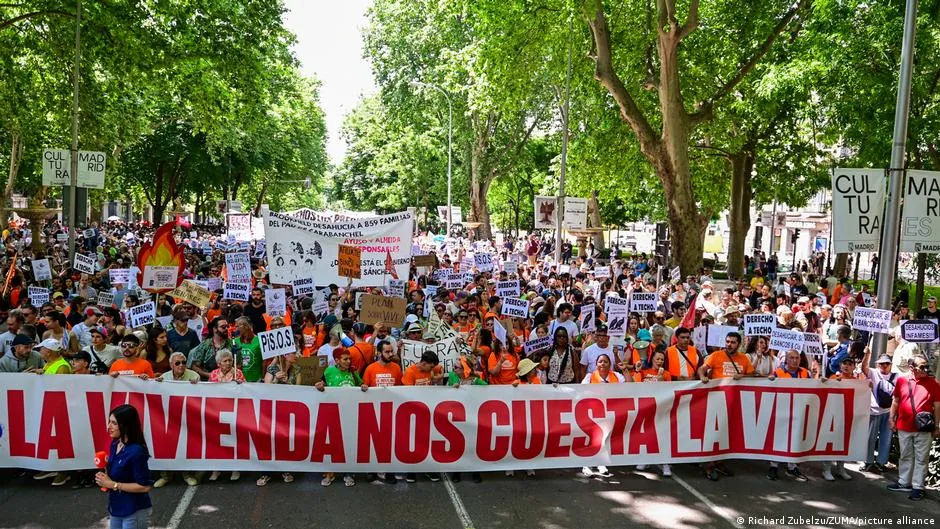
Madrid residents have officially had enough. Thousands of protesters flooded the Spanish capital's streets over the weekend to vent their very justified rage about skyrocketing rents and a housing shortage that has made finding an affordable place to live feel roughly as realistic as winning the lottery, according to Deutsche Welle.
So how bad is it, really?
Pretty bad. Housing has consistently ranked as one of the top concerns among Spanish citizens, and it is not hard to see why. Spain has been hit by a perfect storm of demand-side pressure - tourism is booming, immigration-driven population growth is adding more people to an already strained market, and supply simply has not kept up. The result is a market where rents have climbed to levels that would make a Londoner wince, which is truly saying something.
The protesters are not a fringe group of agitators - they represent a broad cross-section of Madrileños who are watching their city gradually price out the very people who make it worth living in. Teachers, nurses, young professionals, and long-time residents are all finding themselves squeezed out of neighborhoods they have called home for years.
Tourism: great for Instagram, terrible for your landlord's sense of restraint
A major driver of the crisis is the explosion of short-term tourist rentals, which have pulled thousands of apartments off the long-term market. Why rent to a local nurse for a stable income when you can charge a visiting tourist three times as much per night? It is perfectly rational individual behavior that produces a collectively catastrophic outcome - economists call this a market failure, locals call it something significantly less polite.
Spain is far from alone in facing this crisis - similar protests have erupted in cities like Lisbon, Amsterdam, and Barcelona in recent years. But Madrid's demonstration signals that patience among ordinary residents has definitively run out.
What happens next?
Spanish authorities have proposed various measures over the years to tackle housing affordability, with mixed results. Rent control, expanded public housing, and restrictions on tourist apartments have all been debated and partially implemented in different regions. Whether any of it will be enough to cool a market this overheated remains an open and deeply uncomfortable question.
For now, the message from Madrid's streets is clear: people want to live in the city they work in, and they are increasingly unwilling to accept a system that seems designed to make that impossible. Whether their government will listen is, as always, the multi-billion-euro question.