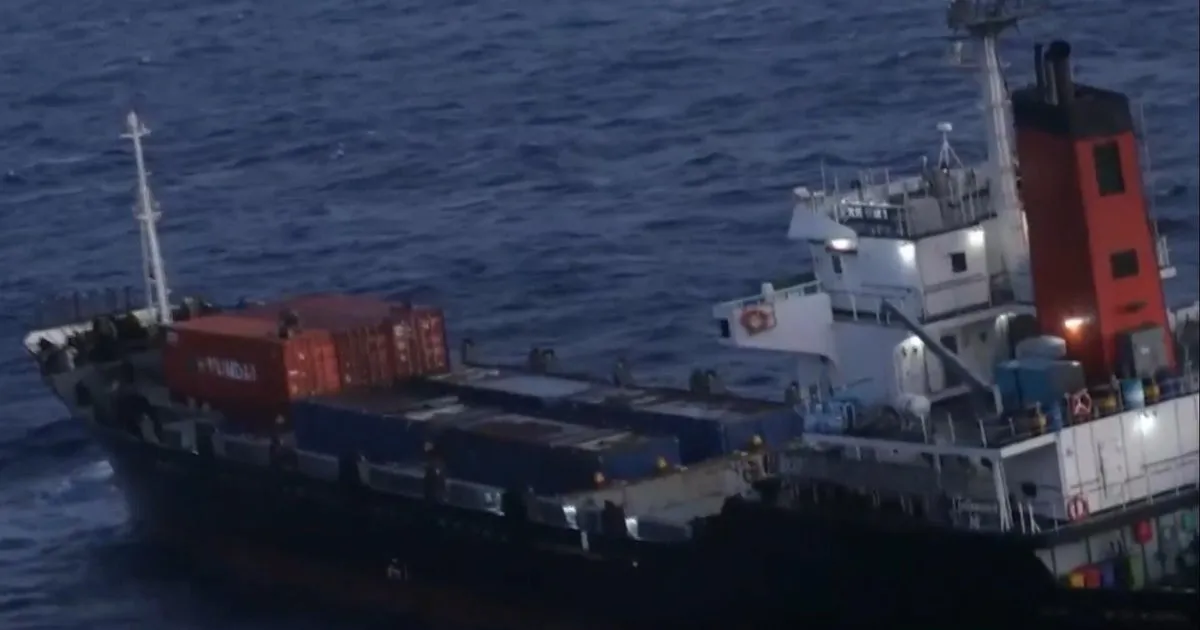
President Donald Trump announced Sunday that the United States would guide ships from countries uninvolved in the conflict with Iran safely through the Strait of Hormuz, even as the U.S. maintains its blockade on Iranian ports, according to CBS News.
The announcement comes as the strategic waterway - through which a significant portion of the world's oil supply passes - remains severely disrupted, sending fuel costs sharply higher for American consumers.
Prices at the pump surge
Gas prices in the United States have climbed 35 cents in just the past week, a rapid increase that analysts attribute directly to uncertainty and restricted movement through the Strait of Hormuz. The strait connects the Persian Gulf to the Gulf of Oman and serves as a critical passage for global energy markets.
The price spike is among the most immediate domestic consequences of the escalating U.S.-Iran confrontation, affecting consumers and freight-dependent industries alike.
A carve-out for neutral nations
Trump's remarks suggest the administration is drawing a distinction between countries it considers parties to the conflict and those it regards as neutral bystanders caught in the disruption. By offering to guide neutral vessels through the waterway, the White House appears to be attempting to limit the broader economic fallout of the blockade while keeping pressure on Iran.
The U.S. blockade on Iranian ports remains in effect, according to CBS News, meaning Iranian shipping continues to face restrictions even as the administration moves to ease passage for other nations' commercial fleets.
Strategic and economic stakes
The Strait of Hormuz is one of the world's most consequential choke points for energy supply. Any sustained disruption to shipping there typically ripples through global oil markets within days, with effects felt at fuel pumps in the United States and abroad.
The combination of military posturing, port blockades, and now a U.S. offer to escort third-party vessels underscores how quickly the standoff with Iran has moved from a regional security issue to one with tangible economic consequences for ordinary Americans.
The White House has not yet detailed the operational specifics of how the U.S. Navy would conduct such escorts or which nations' vessels would qualify for the protection.