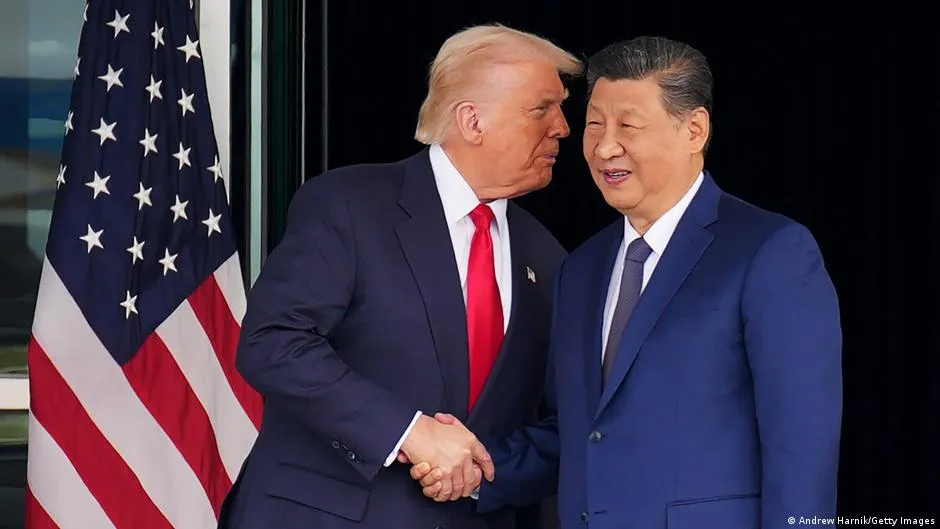
U.S. President Donald Trump is preparing for a high-profile summit with Chinese President Xi Jinping in Beijing, with both leaders facing significant pressure to deliver results on a range of deeply consequential issues, according to reporting by DW.
The agenda for the meeting is expected to be dominated by three major flashpoints: ongoing trade tensions between the world's two largest economies, the situation in Taiwan, and the conflict involving Iran - areas where U.S. and Chinese positions have often diverged sharply.
A foreign policy win for Trump
Trump is said to be seeking a tangible foreign policy achievement from the summit. Trade negotiations between Washington and Beijing have been a defining feature of Trump's political agenda, and any movement toward a deal or framework agreement would likely be framed as a significant diplomatic success by the administration.
The two countries have been locked in a prolonged dispute over tariffs, market access, and technology transfers. A summit of this scale offers both sides an opportunity to reset or accelerate negotiations, though analysts have frequently warned that structural differences make a comprehensive agreement difficult to achieve quickly.
Taiwan and regional security
Taiwan is expected to feature prominently in the discussions. Beijing considers Taiwan part of its territory and has not ruled out the use of force to achieve unification. Washington maintains a policy of strategic ambiguity, supplying Taiwan with defensive weapons while not formally recognizing it as an independent state.
Any statements or agreements touching on Taiwan will be closely watched by governments across the Indo-Pacific region, as well as by Taipei itself.
Iran and broader geopolitical tensions
The Iran situation adds another layer of complexity to the summit. China has maintained economic ties with Tehran despite Western sanctions, and the U.S. has long pressed Beijing to use its influence to constrain Iranian behavior. With regional conflict ongoing, the topic is expected to test the limits of cooperation between the two powers.
The summit represents one of the most significant diplomatic encounters of Trump's current term. While both governments have signaled a desire to manage the relationship, fundamental disagreements on economic policy, human rights, and regional security continue to define the dynamic between Washington and Beijing.
The outcome of the meeting is expected to reverberate well beyond bilateral relations, with implications for global trade, regional stability in Asia, and the broader international order.