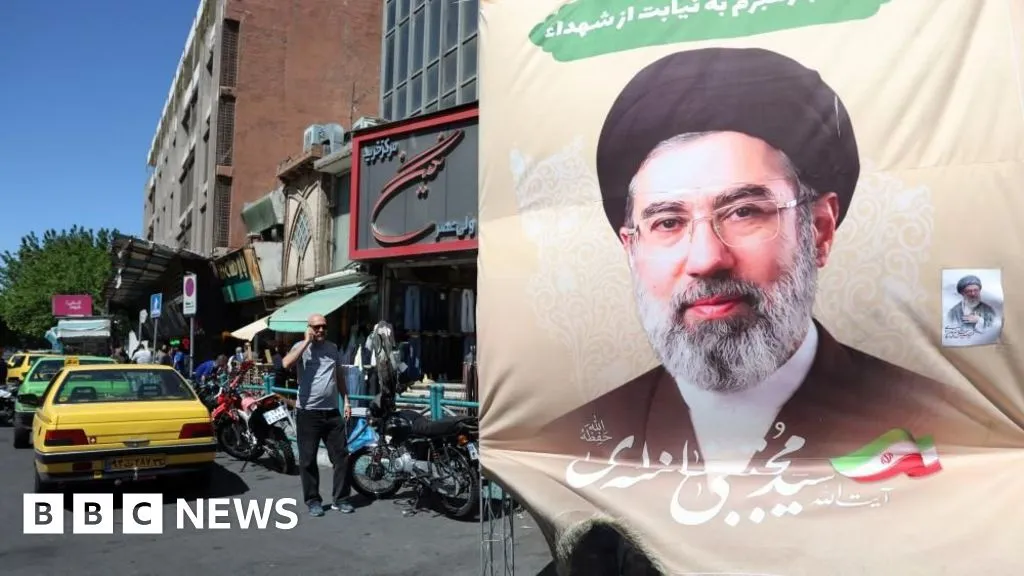
Iran's political structure places the supreme leader at the apex of power, with constitutional authority over the military, judiciary, and major state decisions. But according to reporting by the BBC, the reality of how decisions are made in Iran is considerably more complex and opaque than formal structures suggest.
The country is undergoing a significant period of transition following the death of Supreme Leader Ali Khamenei, and questions about who holds genuine decision-making authority have become increasingly urgent both inside Iran and among foreign governments watching closely.
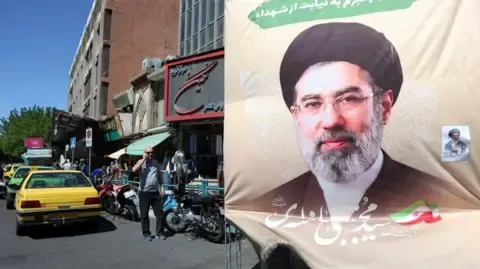
A system of competing centers of power
Iran's governance is not a straightforward hierarchy. Multiple institutions, including the Islamic Revolutionary Guard Corps (IRGC), the Assembly of Experts, the Guardian Council, and the office of the presidency, each command significant resources, loyalties, and influence. These bodies do not always operate in alignment with one another, the BBC reports.
The IRGC in particular has grown into an economic and military force with considerable autonomy. Its leadership has cultivated relationships and interests that extend well beyond traditional military functions, giving it leverage that can shape policy independently of civilian or clerical leadership.
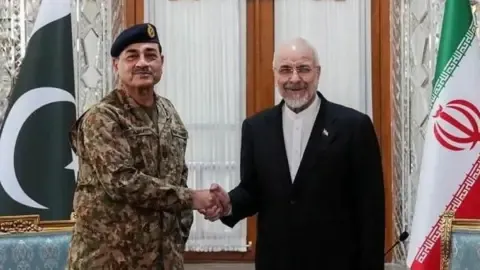
The question of succession
Selecting a new supreme leader falls to the Assembly of Experts, a body of senior clerics. However, analysts note that the process is not fully transparent, and the behind-the-scenes negotiations among powerful factions carry as much weight as any formal vote.
The presidency, meanwhile, holds authority over day-to-day governance and foreign policy implementation, but remains subordinate to the supreme leader on matters the clerical establishment considers fundamental, including Iran's nuclear program and its regional military posture.

External implications
The ambiguity around Iranian decision-making has direct consequences for international diplomacy. Foreign governments and negotiators have long struggled to identify which Iranian officials hold genuine authority to make and honor commitments, particularly in nuclear talks and regional security discussions.
Western officials have at times secured agreements with Iranian government representatives, only to find those agreements challenged or reversed by other centers of power within the system.
The BBC's reporting underscores that Iran's political system was deliberately designed with overlapping and sometimes competing authorities, a structure that its founders believed would prevent any single faction from monopolizing control. In practice, observers say, that design creates an environment where accountability is diffuse and decision-making pathways are difficult to trace from the outside.
As Iran manages its leadership transition, analysts and foreign governments are watching closely to see whether a new supreme leader will consolidate authority in the way Khamenei did over decades, or whether the country's various power centers will assert greater autonomy during the period of uncertainty.