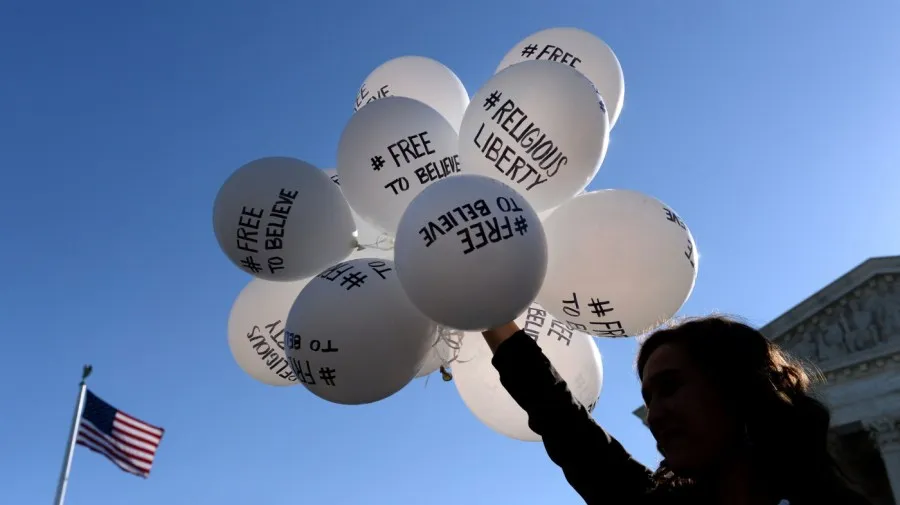
There's a diplomatic chair in Washington that's been sitting empty, and according to a new opinion piece in The Hill, the consequences are anything but trivial. The United States currently lacks a confirmed Ambassador-at-Large for International Religious Freedom - and experts are arguing that this gap is quietly undermining America's ability to advocate for persecuted religious minorities worldwide.
Why a confirmed ambassador actually matters
You might be thinking: "How different can an interim arrangement really be?" Turns out, pretty different. As the argument in The Hill goes, a Senate-confirmed ambassador carries a level of diplomatic weight and institutional credibility that no acting official or placeholder can replicate. When you walk into a foreign ministry representing the United States government with full congressional backing, that's a fundamentally different conversation than showing up as a temporary stand-in.
Think of it like the difference between a substitute teacher and the actual principal. Both can run the room, but only one of them can really make things happen.
The stakes are genuinely high
This isn't just about bureaucratic box-ticking. Religious persecution remains a serious global issue, affecting Christians in parts of the Middle East and Africa, Muslims in China's Xinjiang region, Uyghurs, Yazidis, Jews facing rising antisemitism across multiple continents, and dozens of other communities. The US ambassador for religious freedom is supposed to be the diplomatic tip of the spear on these issues - attending international forums, pressuring foreign governments, and coordinating with NGOs and faith communities on the ground.
Without a confirmed envoy, that spear gets noticeably blunter. Other countries take notice when America's top religious freedom seat is occupied by someone without the full backing of the US Senate. It signals - fairly or not - that this particular issue isn't a top priority.
A rare bipartisan concern
Here's where it gets interesting for anyone who thinks everything in Washington is hopelessly partisan: international religious freedom has historically enjoyed support from both sides of the aisle. Evangelicals, Catholics, Jewish advocacy groups, and Muslim civil liberties organizations have all found common cause around this issue at various points. The office of the Ambassador-at-Large was created under the International Religious Freedom Act of 1998 precisely because Congress, across party lines, decided this mattered.
The argument laid out in The Hill is essentially a call to action - that the White House and Senate should treat filling this role as a genuine priority rather than an afterthought.
Given how much ground the US has to cover on religious freedom globally, that case seems pretty hard to argue with. Someone needs to be in that chair - and not just warming it.