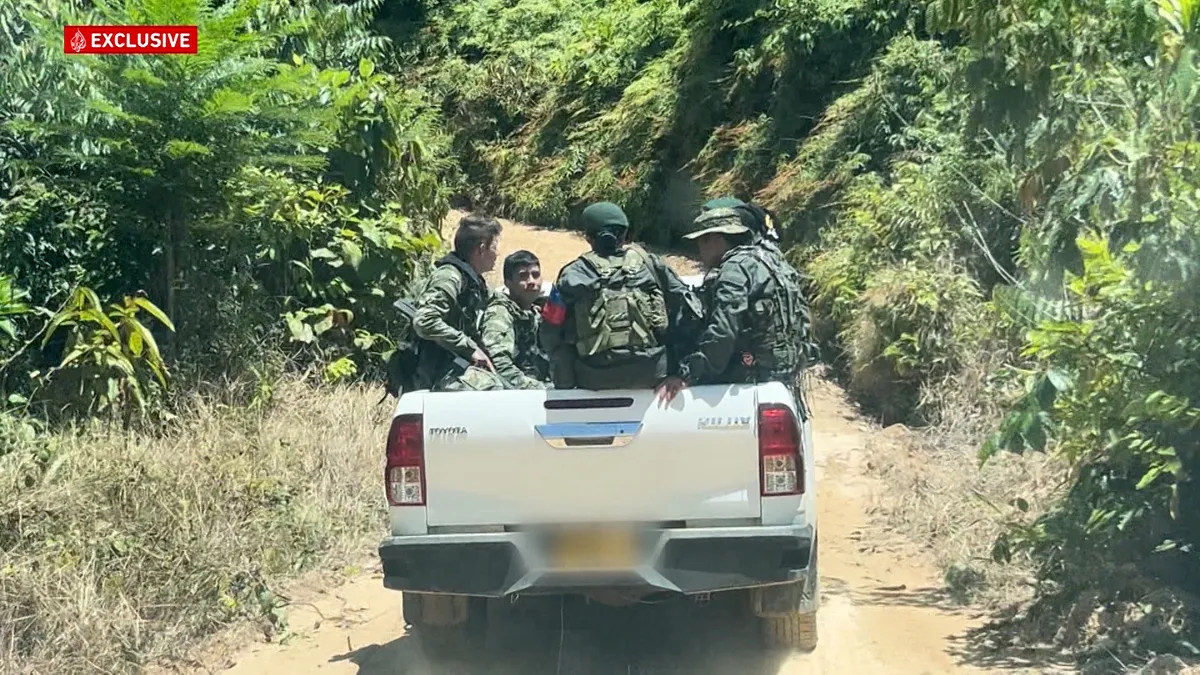
If you thought "we tried the peace thing and it didn't work out" was just something you'd hear at a couples therapy session, think again. In a rare and striking exclusive interview with Al Jazeera, members of a dissident FARC faction in Colombia sat down to explain, in their own words, why they picked the guns back up after the country's landmark 2016 peace deal.
So what actually happened?
The historic peace agreement between the Colombian government and the FARC - the Revolutionary Armed Forces of Colombia - was celebrated globally as a landmark moment. Colombia's decades-long internal conflict, one of the longest-running in the Western hemisphere, was supposed to be winding down. Champagne was (metaphorically) uncorked. Nobel Peace Prizes were handed out.
But according to the dissident rebels who spoke to Al Jazeera, the deal failed to deliver on one of its most basic promises: security. The faction claims that former combatants who laid down their arms were left exposed, without adequate state protection, and that the Colombian government did not follow through on the commitments that were supposed to make peace sustainable in the first place.
A familiar story with brutal consequences
Their claims, it should be noted, are not without broader context. Human rights organizations and independent analysts have repeatedly documented the killings of FARC ex-combatants and social leaders in rural Colombia since the peace deal was signed. According to various reports, hundreds of demobilized fighters have been assassinated in the years following the agreement - a fact that has fuelled bitterness and, in some cases, re-armament among disillusioned former members.
The dissident faction speaking to Al Jazeera represents one segment of a broader fracturing that occurred after the 2016 deal, with several splinter groups rejecting the peace process either from the start or after growing disillusioned with its implementation.
Not exactly a ringing endorsement of the peace process
The interview, published by Al Jazeera on May 30, 2026, is notable precisely because access to these groups is extraordinarily difficult and dangerous to obtain. Getting a camera in front of armed rebels in the Colombian jungle is not your average press junket.
Colombia's current government, led by President Gustavo Petro - himself a former member of the M-19 guerrilla movement - has pursued a policy of "total peace," attempting to negotiate with multiple armed groups simultaneously. Whether that effort can address the grievances voiced by factions like the one interviewed remains, to put it diplomatically, an open question.
For now, the message from the jungle is blunt: peace, as delivered, wasn't peace enough.