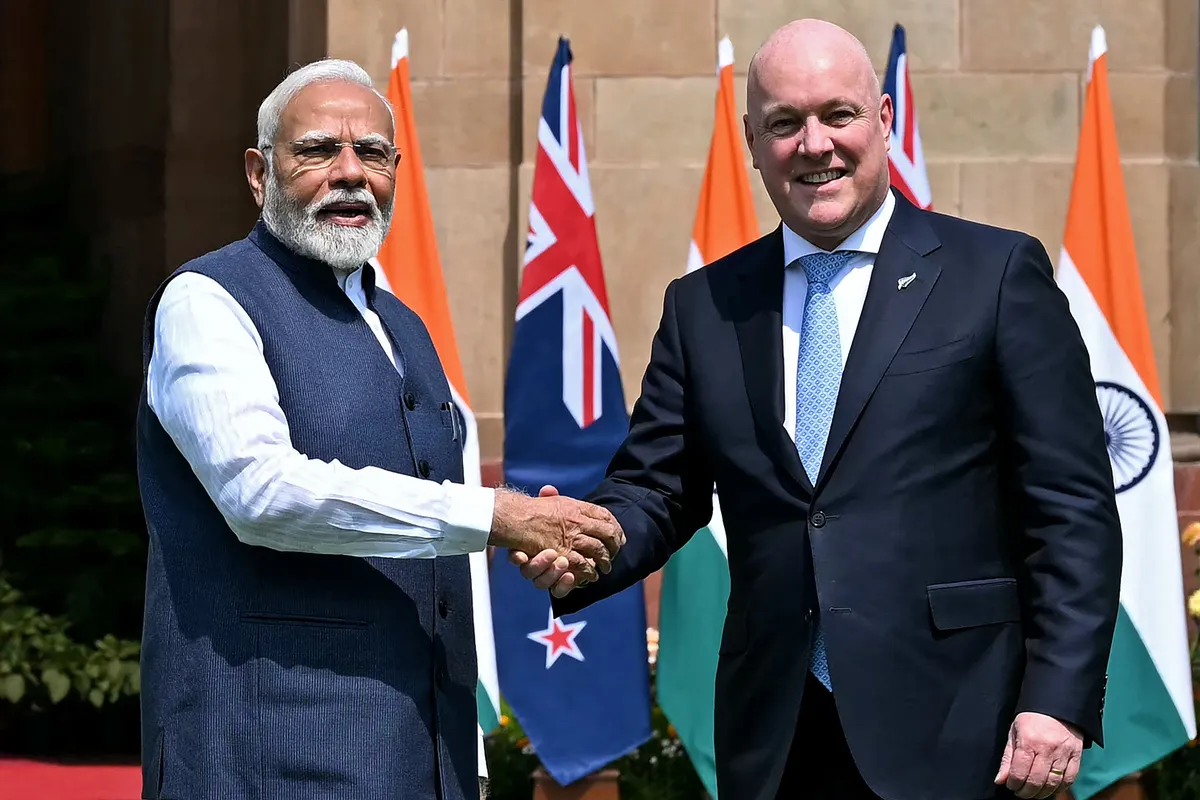
A New Zealand government minister is having a very bad week - and it smells vaguely of fenugreek and bad PR decisions.
According to The Independent, the Wellington minister sparked widespread outrage after describing a trade deal reportedly worth $1.8 billion as bringing a 'butter chicken tsunami' into New Zealand - a remark that critics and community leaders have called 'outright racist.'

The dish that launched a thousand complaints
The comment, apparently intended as a colorful metaphor for increased trade and migration flows with India following the deal, landed about as well as a soggy naan. Indian communities in New Zealand and advocacy groups were quick to condemn the language, pointing out that reducing an entire nation of 1.4 billion people - with one of the world's most diverse and sophisticated culinary traditions - to a single curry dish is, at best, lazy and tone-deaf, and at worst, a textbook example of casual racism.
The backlash was swift, with critics arguing that the framing of an economic partnership as a 'tsunami' of any kind carries deeply problematic connotations, using natural disaster imagery to describe the arrival of people and culture from a non-Western country.
Not just a seasoning issue
This isn't simply a case of a politician fumbling a metaphor at a press conference. Language like this, observers note, reflects broader attitudes toward immigration and trade with non-European nations. Calling a bilateral economic agreement a 'tsunami' - a word associated with destruction and overwhelm - arguably tells you more about underlying anxieties than any trade policy document ever could.
The irony, of course, is that butter chicken itself is a dish of disputed and wonderfully complicated origin - claimed by both India and Pakistan, beloved globally, and arguably more 'Western' in its creamy adaptation than its critics would acknowledge. Using it as shorthand for 'too many Indians coming over' is, frankly, a historical own-goal of considerable proportions.
What happens next
As of reporting by The Independent, the minister was facing calls to apologize and clarify the remarks. Whether the government will distance itself from the comment or attempt damage control with the Indian-New Zealand community remains to be seen.
One thing is certain: whoever approved that particular turn of phrase in a public statement about a major international trade deal may want to update their resume. Preferably before the tsunami hits.