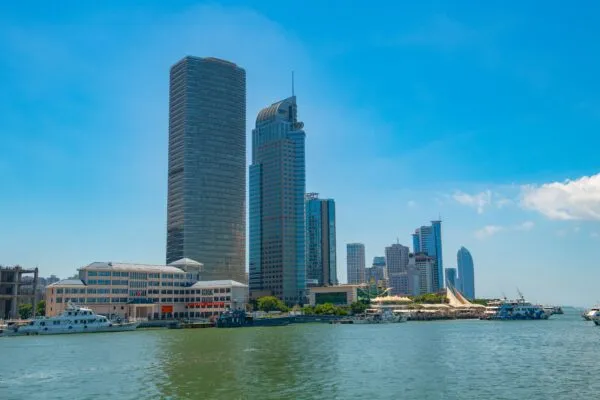
China has put forward the city of Xiamen as its candidate to host the secretariat of the new High Seas Treaty, formally known as the Agreement on Biodiversity Beyond National Jurisdiction (BBNJ), according to reporting by The Diplomat. The move raises the geopolitical stakes in what has become a competitive process to determine where the treaty's permanent administrative body will be based.
The BBNJ agreement, adopted in 2023 after nearly two decades of negotiations at the United Nations, represents one of the most significant international ocean governance frameworks in history. It establishes rules for the protection of marine biodiversity in waters beyond any nation's territorial jurisdiction, covering roughly half of the Earth's surface.
Why the secretariat matters
The location of a treaty secretariat carries symbolic and practical weight. Host countries gain a degree of institutional proximity to the body's day-to-day operations, as well as diplomatic visibility on a global stage. Secretariats also bring international staff, meetings, and ongoing diplomatic activity to the host city.
For China, securing the BBNJ secretariat in Xiamen would represent a tangible expansion of its footprint in multilateral environmental governance - a domain historically dominated by Western nations and institutions based in Europe and North America.
Xiamen's candidacy
Xiamen, a coastal city in Fujian province, already hosts China's State Oceanic Administration research infrastructure and has been positioned by Beijing as a hub for marine science and policy. Chinese officials have argued the location would improve accessibility for developing nations in Asia and the Global South, a framing designed to build coalition support among treaty members.
The Diplomat notes that China's bid ups the competition significantly, as several other nations are also reported to be pursuing the hosting role. The final decision is expected to be made by the Conference of the Parties once the treaty enters into force.
Broader context
China has increasingly sought leadership roles in international bodies governing shared global spaces, including the deep seabed, outer space, and cyberspace. Critics in Western governments have argued this trend reflects a strategic effort to shape rules and norms in emerging governance areas. Chinese officials maintain their participation reflects legitimate interests as a major maritime power and a contributor to global environmental goals.
The BBNJ treaty still requires ratification by 60 states before it enters into force. As of early 2025, that threshold had not yet been reached, though signatories continued to grow. The secretariat question is among several institutional decisions awaiting resolution once the treaty becomes legally binding.