Just two months. That's all it took for China to double the computing scale of its largest AI cluster dedicated to scientific research - and they did it entirely without US chips. If that doesn't make a few people in Washington nervously loosen their ties, nothing will.
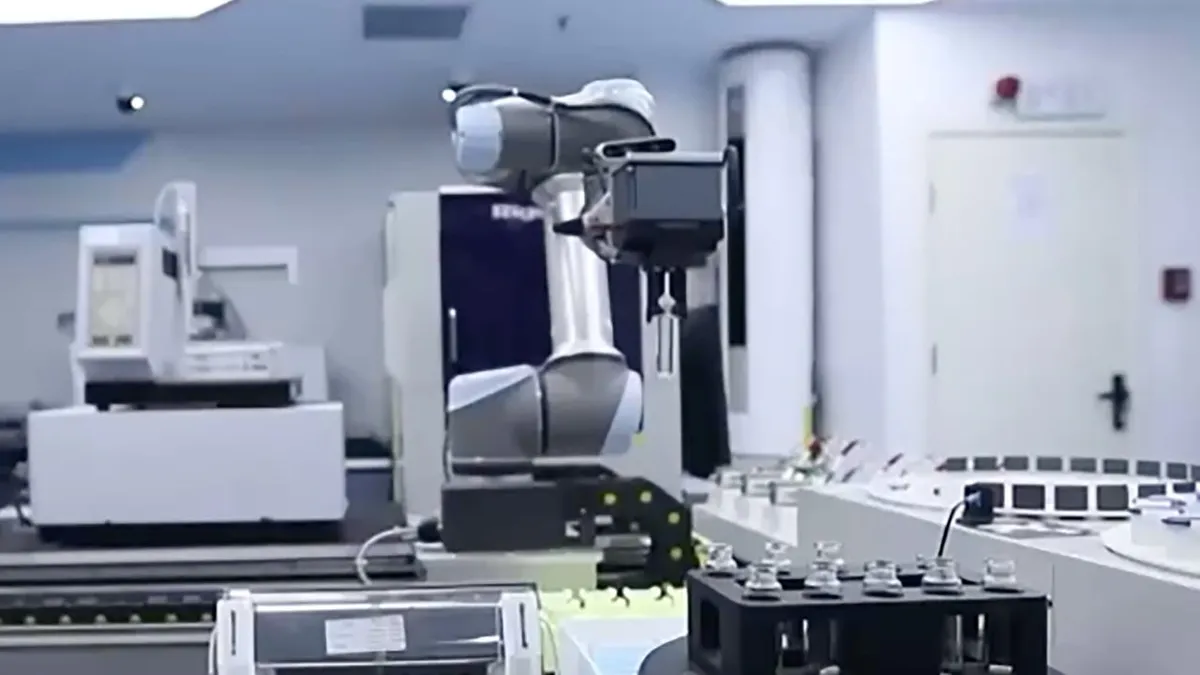
According to state broadcaster CCTV, China's national AI computing cluster for science officially entered full operation this week, running out of Zhengzhou in Henan province as part of the country's national supercomputing network. The expansion was powered entirely by domestically produced AI accelerator cards made by Sugon, a Chinese supercomputer developer affiliated with the Chinese Academy of Sciences, as reported by the South China Morning Post.
Who is Sugon, and why does it matter?
Sugon - also known as Dawning Information Industry - is no newcomer to this space. The company has been building supercomputing infrastructure for years and is deeply embedded in China's state-backed push toward technological self-reliance. The fact that it was able to double chip capacity in just two months suggests the domestic production pipeline is no longer a trickle - it's starting to look more like a firehose.
This matters enormously in the context of US export controls, which have progressively restricted the sale of high-end AI chips - think Nvidia's H100 and A100 series - to Chinese entities. The policy was explicitly designed to slow China's AI and military computing ambitions. Whether it is working as intended is now a very legitimate question.
The bigger picture: Science today, everything else tomorrow?
The cluster is framed around scientific research applications - think climate modeling, drug discovery, materials science and the kind of number-crunching that wins Nobel Prizes. But the underlying capability being demonstrated here is the ability to rapidly scale domestic compute infrastructure independent of US supply chains.
That's not a small thing. For years, critics of US chip export controls argued that they would simply accelerate China's domestic chip industry rather than kneecap it. The Zhengzhou expansion is the kind of data point those critics will be bookmarking.
It's worth noting that Sugon's chips are not expected to match Nvidia's top-tier offerings in raw performance - at least not yet. But "not as fast as the best chips money can't buy" is a very different problem from "can't build anything at all."
China is clearly betting that good enough, at scale, and under sovereign control, beats cutting-edge-but-embargoed every time. And right now, they're doubling down on that bet every two months.