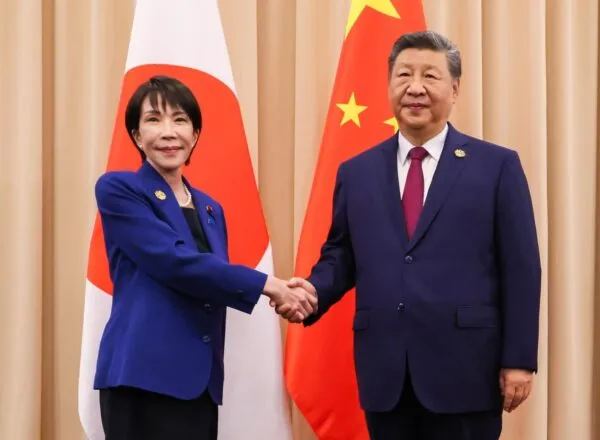
If you thought U.S.-China tensions were the main geopolitical drama of our era, buckle up - because Beijing has apparently decided that Japan's Takaichi administration deserves a special, extra-spicy edition of Chinese diplomatic fury. According to an analysis published by The Diplomat, what China is doing to Tokyo right now is unlike anything we've seen before in the bilateral relationship.
Not your grandpa's diplomatic tension
Japan-China relations have had their rough patches - the Senkaku Islands dispute, wartime history rows, competing influence in Southeast Asia. But The Diplomat's analysis outlines three specific characteristics of Beijing's current campaign against the Takaichi government that set it apart from the standard-issue diplomatic cold shoulder.
The criticism from China has reportedly taken on a new intensity, a broader scope, and a more coordinated character than previous episodes of Sino-Japanese friction. In other words, this isn't just some bureaucrat in Beijing having a bad week and venting on state television. This appears to be a deliberate, structured pressure campaign.
Why Takaichi specifically?
Sanae Takaichi has long been viewed in Beijing as one of Japan's more hawkish political figures - a regular visitor to Yasukuni Shrine, a vocal advocate for stronger defense posture, and a politician who does not exactly go out of her way to soothe Chinese anxieties. Her rise to the top spot was always going to test the relationship, but the scale and nature of China's response has apparently surprised even seasoned observers of the relationship.
What does "unprecedented" actually mean here?
According to The Diplomat's framing, the campaign combines state media attacks, official government statements, and what appears to be a coordinated messaging effort across multiple channels simultaneously. The cumulative effect is a pressure campaign that feels less like a reaction and more like a strategy.
For context, China has previously used economic coercion against Australia, Lithuania, and South Korea to signal displeasure. Whether Tokyo is next in line for that kind of treatment - or whether this stays in the realm of strongly worded editorials in the Global Times - remains the key question analysts are watching.
The bigger picture
Japan has been steadily expanding its defense budget and deepening security ties with the United States, the Philippines, and other regional partners. From Beijing's perspective, a hawkish Takaichi government represents the acceleration of a trend China has been trying to slow for years.
Whether the pressure campaign works, backfires, or simply becomes the new normal in the relationship is anyone's guess. But if The Diplomat's analysis is right, the diplomatic temperature between Asia's second and third largest economies just got turned up several notches - and it's worth paying attention.