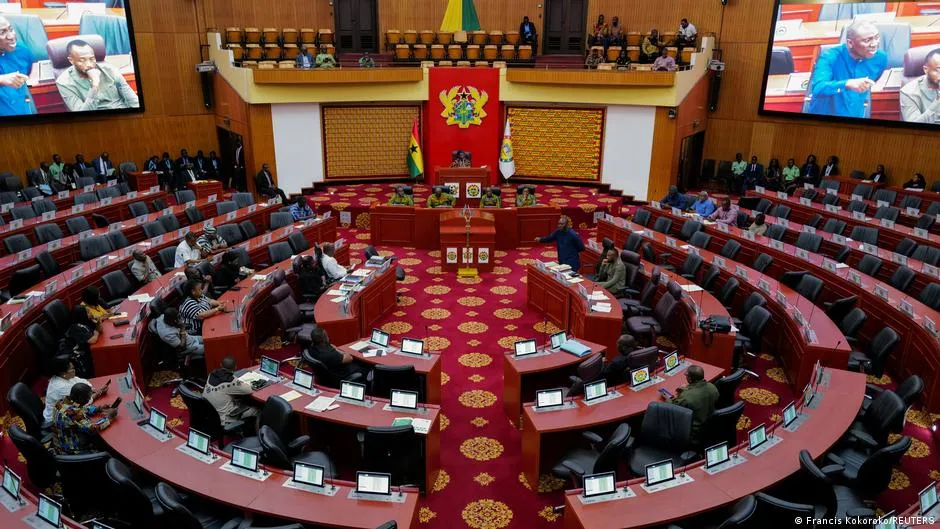
Ghana's parliament has officially passed a sweeping anti-LGBTQ law that legal observers and rights groups are calling one of the most restrictive pieces of legislation of its kind on the African continent, according to Deutsche Welle.
The law doesn't just target LGBTQ individuals directly - it goes a significant step further by imposing prison terms on anyone found to be promoting LGBTQ activities. That's a notably broad brush, raising serious questions about what counts as promotion in practice. Advocacy work? Educational materials? A rainbow flag in a window? The legislation's vague framing has human rights organizations deeply concerned about how it will be interpreted and enforced on the ground.
So what exactly does the law do?
At its core, the legislation criminalizes the promotion, advocacy, and support of LGBTQ identities and relationships within Ghana. Individuals who run afoul of these provisions face the very real prospect of prison time. Critics argue this effectively silences civil society organizations, journalists, healthcare workers, and ordinary citizens from even discussing LGBTQ issues in a supportive context.
Ghana already had existing laws on its books that effectively made same-sex relationships illegal, rooted in colonial-era penal codes that many African nations inherited and retained. This new legislation represents a considerable escalation beyond that baseline, signaling a political appetite to actively prosecute not just identity, but expression and association.
Why now, and why does it matter?
The passage comes amid a broader regional trend of hardening legal stances on LGBTQ rights across parts of Africa, a trend that has drawn sharp condemnation from international human rights bodies and Western governments, while enjoying significant domestic popular and religious support in the countries where such laws are enacted.
Ghana, often held up as one of West Africa's more stable democracies, passing legislation this severe sends a notable geopolitical signal. It puts pressure on international partners - including development aid donors - to decide how they respond when democratic allies enact laws that conflict sharply with internationally recognized human rights standards.
Rights organizations are expected to mount legal challenges, though the path through Ghanaian courts on this particular issue has historically been an uphill one.
The situation is developing, and the full scope of enforcement will likely become clearer in the months following the law's enactment. For LGBTQ Ghanaians and their allies, however, the message from parliament is already loud and unambiguous.