If you thought China's military aviation story was just about stealth fighters and aircraft carriers, buckle up - because Beijing has been quietly cooking something far nerdier and arguably more strategically interesting in the background.
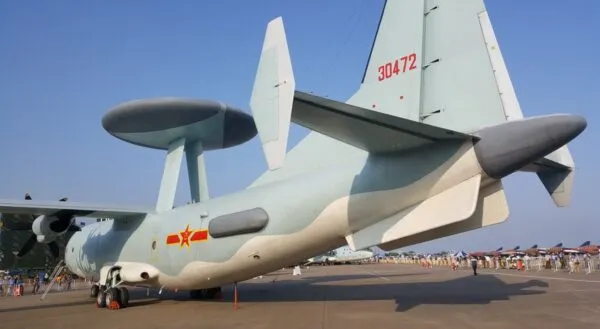
According to a detailed analysis published by The Diplomat, the People's Liberation Army Air Force has been on a decade-long tear building out what military analysts call 'special mission' aircraft - the unglamorous but absolutely critical workhorses of modern warfare that handle everything from electronic warfare and intelligence gathering to airborne early warning and command-and-control.
So what counts as a 'special mission' aircraft?
Think less Top Gun, more chess grandmaster. These are the planes that see everything, jam enemy communications, relay battlefield data, and generally make modern military operations actually function. They are the nervous system of an air campaign rather than its fist.
The Diplomat's reporting indicates that China's inventory of these platforms has grown substantially in both raw numbers and technical capability over the past ten years. That is a significant shift - for a long time, this was considered one of the PLA's notable weaknesses relative to the United States military, which has spent decades refining its own fleet of intelligence, surveillance, and reconnaissance (ISR) and electronic warfare aircraft.
Why does this matter?
The short answer: because quantity has a quality all its own, and quality improving quantity is genuinely alarming to rival military planners. A modern air force without robust special mission aircraft is essentially flying blind and deaf compared to one that has them. Closing that gap is not a minor footnote - it is a generational shift in military capability.
Analysts have long noted that while China moved quickly on flashier platforms like the J-20 stealth fighter, the special mission side of the ledger lagged. The Diplomat's reporting suggests that gap is narrowing, and in some categories, narrowing fast.
The bigger picture
This development fits into the broader pattern of the PLA's modernization push, which has been relentless since the early 2010s. The Chinese military is no longer simply producing impressive hardware for parades - it is fielding systems designed for actual operational use in complex, contested environments.
For defense planners in Washington, Tokyo, Taipei, and Canberra, the takeaway is uncomfortable: the PLA's air force is becoming a far more complete and capable force, not just in the platforms that make headlines, but in the quieter, less photogenic aircraft that actually win wars.
Nobody makes a movie about the airborne early warning plane. But ask any serious military strategist, and they will tell you - those are the planes you really do not want your adversary to have.