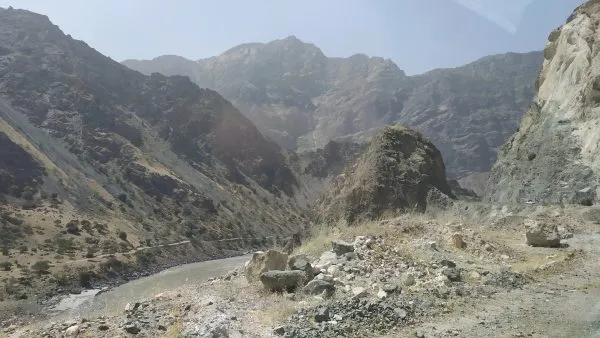
China has established a new administrative county in a border region adjacent to Afghanistan, a move analysts say reflects Beijing's intentions to deepen economic and political integration with its southwestern neighbor and extend influence further into Central Asia, according to reporting by The Diplomat.
The administrative change, while appearing routine on the surface, carries strategic significance. Border counties in China often serve as logistical and governance hubs for cross-border trade, infrastructure development, and population management - functions that align closely with China's broader ambitions in the region.
What the reorganization signals
The Diplomat's analysis suggests the county formation is consistent with China's incremental approach to expanding its footprint in Afghanistan since the Taliban's return to power in 2021. Beijing has moved cautiously but steadily, becoming one of the few major powers to maintain formal engagement with the Taliban government.
China appointed an ambassador to Kabul in 2023, the first foreign nation to do so under Taliban rule, signaling a pragmatic recognition of the de facto authorities regardless of international isolation. Resource extraction agreements, particularly around oil and minerals, have followed.
The Central Asia dimension
Afghanistan sits at a geographic crossroads linking China's Xinjiang region to Central Asian republics and, ultimately, to markets in the Middle East and Europe. Beijing has long viewed stable Afghan territory as essential to its Belt and Road Initiative connectivity goals.
A functional administrative county near the Wakhan Corridor - the narrow strip of Afghan territory that borders China - would provide infrastructure to support overland trade routes that currently remain underdeveloped. Chinese planners have previously floated road and rail links through this corridor as part of broader connectivity ambitions.
Security concerns and the Taliban relationship
China's engagement with Afghanistan is not without friction. Beijing has pressed the Taliban to suppress the East Turkestan Islamic Movement, a militant group China holds responsible for attacks in Xinjiang. The Taliban have provided assurances on this front, though independent verification remains difficult.
The new county therefore represents a calculated wager - that stability under Taliban governance, however imperfect from Beijing's perspective, is preferable to the chaos that preceded it, and that administrative groundwork laid now will pay dividends when regional connectivity projects advance.
Whether the county formation translates into meaningful on-the-ground development will depend heavily on security conditions and the pace of Chinese investment, factors that remain uncertain across much of Afghanistan.