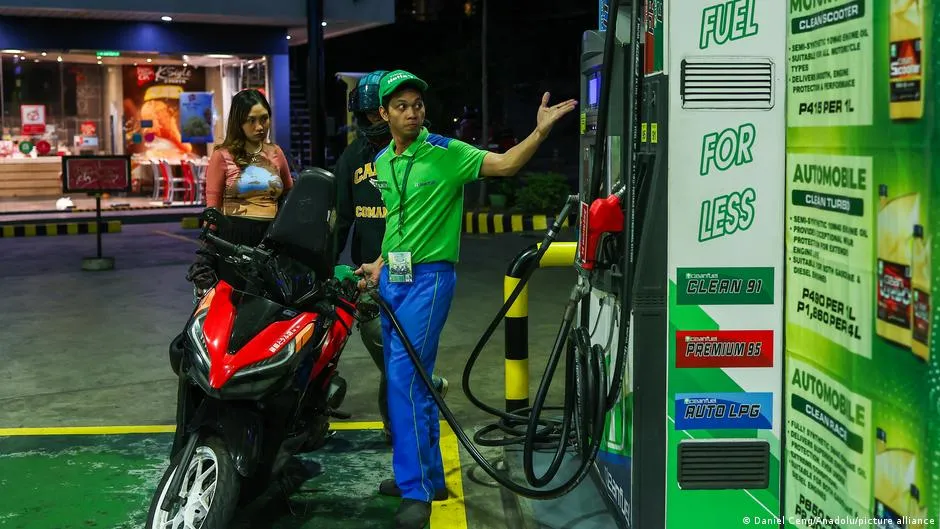
If you've been avoiding looking at the fuel pump display lately, consider this your official permission to keep doing that. According to Deutsche Welle, Germany is now paying up to 40% more per liter of diesel than it did before the Iran war - and that's not even the worst of it globally. Some countries have seen even steeper jumps, turning what used to be a mundane errand into a small financial crisis.
So what are governments actually doing about this?
Glad you asked, because the answer is: a lot of things, with varying degrees of effectiveness and creativity. Governments around the world are reaching into their policy toolboxes and pulling out a familiar mix of fuel tax cuts, subsidies, price caps, and the occasional desperate press conference.
Some nations have moved to temporarily slash fuel excise duties, essentially eating into their own tax revenue to give drivers a bit of relief at the pump. Others have introduced targeted subsidies aimed at lower-income households and freight operators, who tend to absorb fuel shocks the hardest since their entire livelihoods run on diesel.
Price caps have also made a comeback in certain markets - a policy that economists love to argue about at dinner parties, with one camp calling it a short-term lifeline and the other calling it a long-term headache. Both are arguably correct.
The bigger picture nobody wants to talk about
Here's the awkward truth lurking behind all these emergency measures: they are, by design, temporary. The structural dependence on fossil fuels means that every geopolitical wobble - whether a conflict in the Middle East or a sneeze from OPEC - sends prices ricocheting through global economies.
The Iran war has simply made this vulnerability impossible to ignore. Supply disruptions and heightened risk premiums have baked extra costs into every barrel of oil making its way through already-strained global markets.
For everyday drivers, truckers, farmers, and small businesses, the math is brutal regardless of which government band-aid gets applied. Fuel is embedded in virtually every supply chain, meaning that when pump prices go up, so does almost everything else - quietly and persistently.
What comes next?
The uncomfortable answer is that nobody fully knows. Governments are buying time with subsidies and tax cuts, hoping either that prices stabilize or that the political heat dies down - whichever comes first. Meanwhile, the longer-term argument for accelerating the transition away from oil dependency is getting louder, even if it remains politically complicated almost everywhere.
For now, though, the horse option remains on the table. Hay prices, at least, have not spiked. Yet.