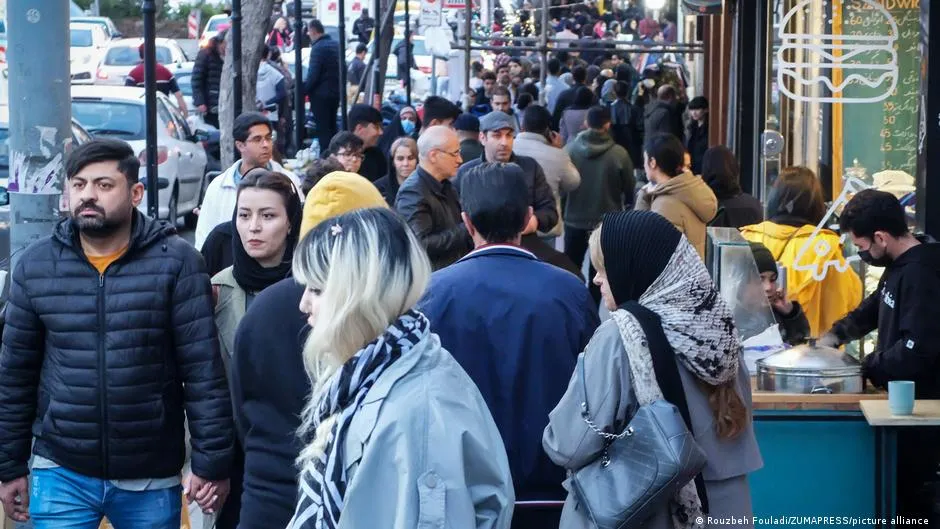
If you thought your Monday morning commute was bad, spare a thought for Iranian workers who are showing up to find their entire factory no longer exists. According to a report by Deutsche Welle, six weeks of war have triggered a catastrophic wave of job losses across Iran, with hundreds of thousands of workers left without income as destroyed industrial infrastructure brings whole sectors grinding to a halt.
The scale of the damage
The situation is being described as a severe economic shock hitting ordinary Iranians particularly hard. Bombed-out and damaged industrial facilities have paralyzed production across multiple sectors, creating a ripple effect that goes well beyond the immediate destruction. When a factory stops functioning, everyone from the floor workers to the suppliers to the local tea vendor outside the gates feels the pinch.
DW's reporting highlights that the job losses are not merely a side effect of the conflict - they represent a structural collapse in productive capacity that will take considerable time and resources to rebuild, even after any eventual ceasefire.
Workers caught in the crossfire
It is worth pointing out the obvious here: wars are remarkably bad for employment. But the speed and scale of this particular economic unraveling has raised eyebrows among analysts. Hundreds of thousands of jobs lost in just six weeks is not a statistic you shake off with a government press release and a thumbs up emoji.
Iranian workers, who were already navigating an economy battered by years of international sanctions, now face a labor market that has been further kneecapped by physical destruction. The compounding effect of sanctions plus war damage is, to put it in the technical economic terminology, really not great.
What comes next?
Rebuilding industrial capacity after active conflict is a notoriously slow and expensive process. Even if hostilities were to end tomorrow, facilities need to be reconstructed, supply chains re-established, and investor confidence somehow coaxed back from whatever bunker it fled to. For the workers currently without wages, that timeline offers cold comfort.
The human cost behind the headline numbers is significant. Each lost job represents a household losing its income, potentially in an environment where social safety nets are already stretched thin.
As Deutsche Welle notes, the full economic picture is still emerging, but the early indicators are grim. Iran's industrial heartland is taking a beating that economists and workers alike will be reckoning with long after the guns go quiet.