Taiwan's defense procurement program is facing significant headwinds, and the primary obstacle may not be budget constraints or logistical delays - it is growing uncertainty about whether the United States will follow through on its security commitments, according to an analysis published by The Diplomat.
The report argues that doubts surrounding U.S. credibility have made it increasingly difficult for Taiwan to justify and sustain major arms purchases. When the reliability of a patron state comes into question, the strategic calculus for acquiring weapons systems tied to that patron's doctrine, training, and supply chains becomes considerably more complicated.
Why credibility matters for procurement
Arms purchases are rarely simple transactions. They involve long-term maintenance agreements, training pipelines, spare parts dependencies, and doctrinal alignment. Taiwan's military has been deeply integrated with American systems and standards over decades, meaning that any perceived wavering in U.S. commitment does not just raise political concerns - it introduces practical risks into the procurement process itself.
If Taiwanese defense planners cannot be confident that the United States will continue to provide parts, technical support, or even follow-through on contracted deliveries under future political conditions, the value proposition of American-sourced hardware becomes harder to defend internally.
A broader strategic dilemma
The analysis comes amid a broader debate about the durability of U.S. security guarantees in the Indo-Pacific. Questions about Washington's willingness to intervene militarily in a Taiwan Strait contingency have circulated for years, but concerns have grown more acute as American domestic politics have become increasingly unpredictable.
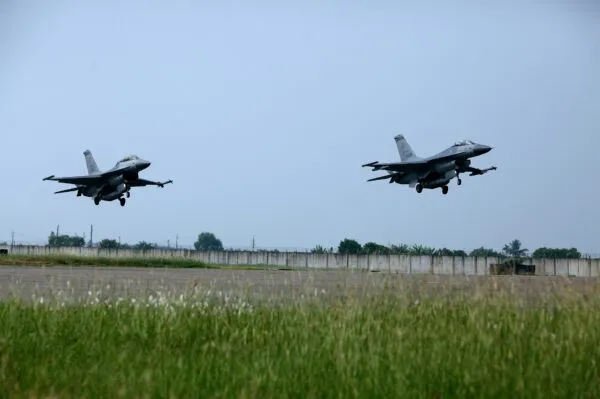
Taiwan has taken steps in recent years to expand its defense budget and develop indigenous military capabilities, including domestically produced submarines and fighter upgrades. These efforts reflect, in part, a desire to reduce dependence on external suppliers. However, such programs take years to mature and cannot quickly substitute for the systems Taiwan has traditionally sourced from the United States.
Procurement backlogs add pressure
Taiwan already faces a substantial backlog of approved but undelivered American arms, a situation that has persisted for several years due to production constraints and competing global demand, particularly following the outbreak of the war in Ukraine. That backlog has itself fueled skepticism in Taipei about the reliability of U.S. arms transfers as a defense planning foundation.
The Diplomat's analysis suggests that resolving Taiwan's procurement stall will require more than administrative fixes or additional budget allocations. It will require credible, sustained signals from Washington that its commitment to Taiwan's defense remains firm - signals that, for now, appear difficult to provide with confidence.