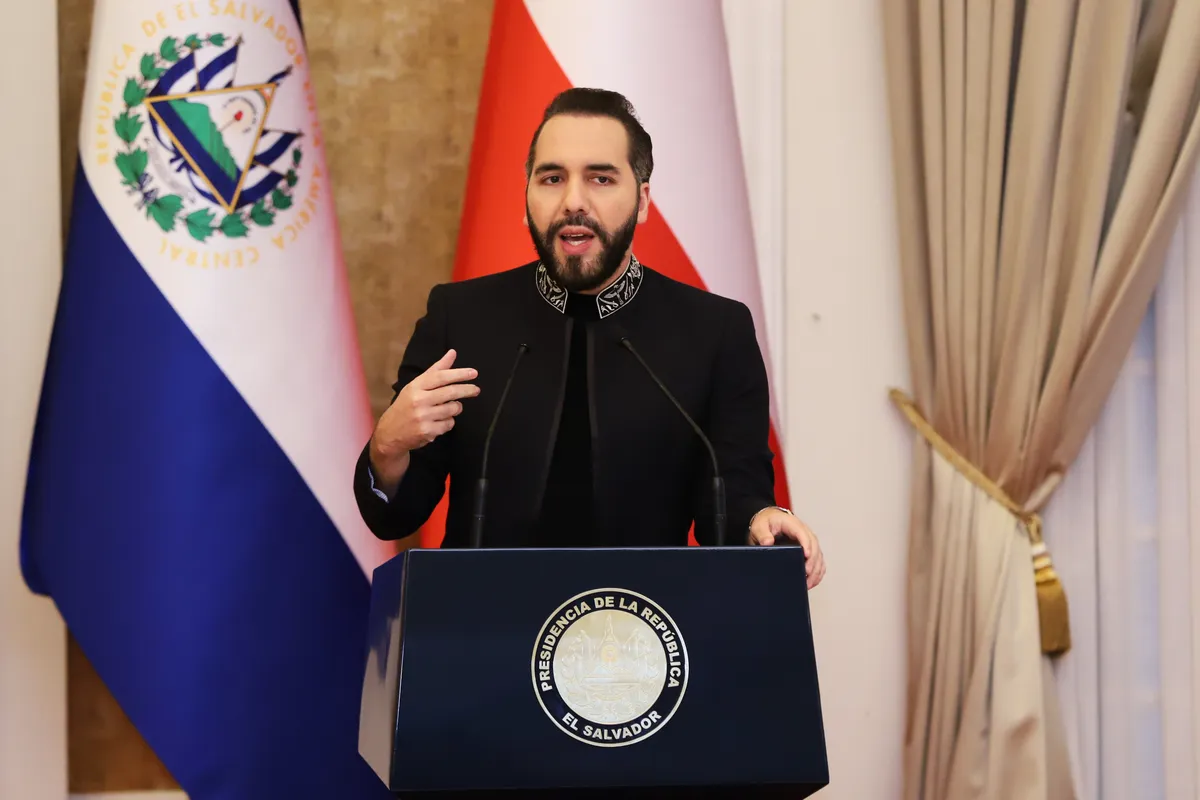
Salvadoran President Nayib Bukele has signed into law a set of criminal justice reforms that would allow courts to impose life prison sentences on individuals as young as 12 years old, according to reporting by NPR.
The legislation applies to people convicted of committing or being an accomplice to a range of serious crimes, including homicide, femicide, rape, and gang membership. The reforms represent a significant expansion of El Salvador's juvenile justice system, lowering the age threshold at which the harshest penalties can be applied.
Scope of the legislation
Under the new legal framework, children convicted of the listed offenses face the possibility of life imprisonment, a sentence typically reserved for adult offenders in most legal systems. The inclusion of gang membership as an eligible offense reflects the Bukele administration's continued focus on dismantling criminal organizations in the country.
El Salvador has been under a state of emergency since March 2022, during which the government has arrested tens of thousands of suspected gang members. That crackdown, widely credited by Bukele's administration with a sharp reduction in homicide rates, has also drawn sustained criticism from human rights organizations who say due process protections have been routinely violated.
International human rights concerns
The extension of life sentencing to children is likely to intensify scrutiny from international human rights bodies. Organizations such as UNICEF and Human Rights Watch have consistently argued that juvenile justice systems should prioritize rehabilitation over punitive incarceration, and that life sentences for children violate international standards including the United Nations Convention on the Rights of the Child.
El Salvador has ratified that convention, which prohibits life imprisonment without the possibility of release for offenses committed by persons under 18 years of age. It remains unclear how the new domestic law reconciles with those treaty obligations.
Political context
Bukele, who won re-election in early 2024 with a commanding majority, has built much of his political brand around aggressive anti-crime policies. His approval ratings have remained high domestically, even as international observers and opposition figures raise concerns about the concentration of executive power and the erosion of judicial independence.
The signing of these reforms follows a series of legislative moves that have progressively tightened El Salvador's approach to criminal justice, including measures that have affected how both adults and minors are prosecuted and sentenced.
NPR reported the details of the reforms, though the Salvadoran government had not issued a detailed public statement outlining the full scope of implementation guidelines at the time of publication.