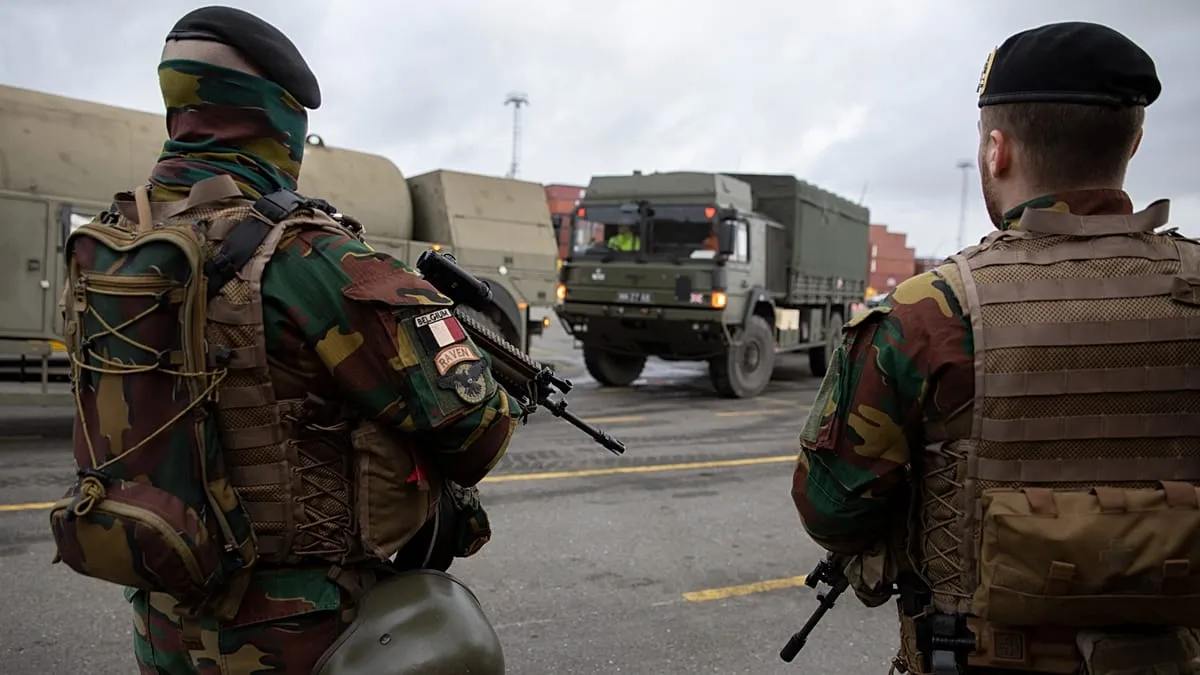
Somewhere in Brussels, right now, a group of EU ambassadors are sitting in a room, pretending the worst has happened, and quietly arguing about what to do next. According to Euronews, representatives from all 27 EU member states have been holding closed-door discussions on how to activate the bloc's mutual defence clause - a rarely-discussed but very real provision tucked inside the EU's founding treaties.
The talks are essentially elaborate tabletop exercises, simulating a range of threat scenarios from hybrid attacks - think cyberattacks, disinformation campaigns, and infrastructure sabotage - to more traditional, boots-on-the-ground military aggression. The kind of stuff that, until a few years ago, felt more like a Tom Clancy novel than a Monday morning agenda item.
So what exactly is this mutual defence clause?
Article 42.7 of the Treaty on European Union - not to be confused with NATO's Article 5, though comparisons are inevitable - obliges EU member states to aid a fellow member that falls victim to armed aggression. It has only been formally invoked once, by France in 2015 following the Paris attacks. Since then, it has mostly gathered dust while Europe assumed the adults were in charge elsewhere.
That assumption, Euronews suggests, is no longer holding up particularly well.
The devil is very much in the details
Here is where it gets complicated, and frankly a little concerning. While the war-gaming sessions are apparently ongoing, significant questions remain about the specifics of the scenarios being tested and - crucially - what the agreed outcomes actually look like. In other words: they are rehearsing the play, but nobody has fully written the ending yet.
The private nature of the discussions means very little has been confirmed publicly about which threat scenarios are on the table or whether member states are reaching any meaningful consensus. Given that the EU includes countries with wildly different threat perceptions, military capacities, and relationships with both the US and Russia, getting 27 governments to agree on literally anything defence-related is, to put it diplomatically, a project.
Why now?
The timing is not subtle. With ongoing instability on Europe's eastern flank, growing uncertainty around American security commitments to the continent, and hybrid threats becoming an almost weekly headline, the EU appears to be quietly stress-testing its own rulebook before it actually needs to use it.
Whether these discussions will produce anything concrete - or remain an elaborate, classified shrug - remains to be seen. But the fact that they are happening at all, behind closed doors, with some urgency, says quite a lot about where European security thinking is in 2025.