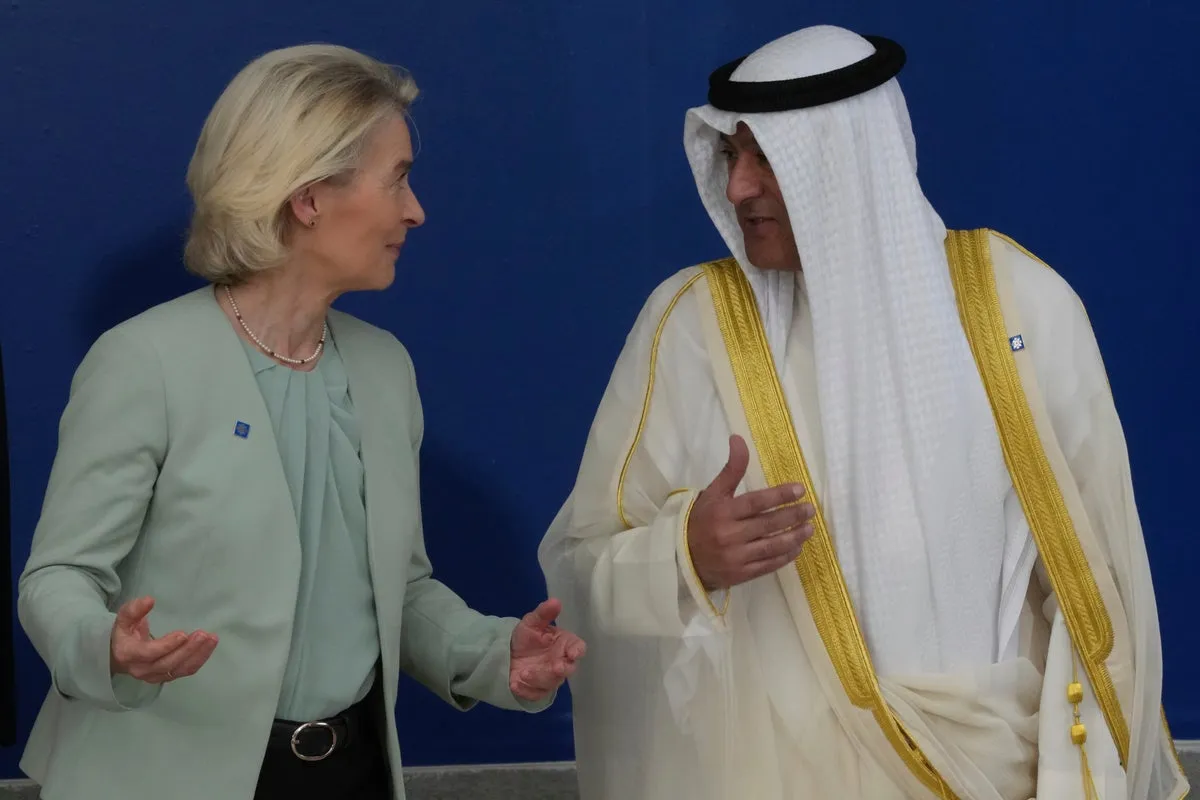
Senior European Union officials are examining plans to fund alternative energy infrastructure in the Middle East designed to route supply chains around conflict-prone areas, including the strategically critical Strait of Hormuz, according to reporting by The Independent.
The Strait of Hormuz, a narrow waterway between Iran and the Arabian Peninsula, handles a significant share of the world's oil and liquefied natural gas shipments. Periodic tensions involving Iran have raised longstanding concerns among Western nations about the vulnerability of global energy supplies to disruption at the chokepoint.
What officials have said
Top EU officials, including European Commission President Ursula von der Leyen, have indicated the bloc is actively looking into ways to bolster energy security by supporting infrastructure that would reduce dependence on routes passing through volatile zones in the region, The Independent reported.
The discussions are part of a broader European push to diversify and secure energy supplies following the disruptions caused by Russia's invasion of Ukraine, which forced the EU to rapidly reduce its reliance on Russian fossil fuels and accelerated interest in alternative supply corridors.
Strategic context
Cyprus, an EU member state located in the eastern Mediterranean, has been identified as a potential hub in discussions about alternative routing. The island sits at a geographic crossroads between Europe, the Middle East, and North Africa, making it relevant to any infrastructure plans connecting Gulf energy producers with European consumers.
The broader regional picture remains complicated. Ongoing conflicts in Gaza and Yemen, combined with tensions between Western powers and Iran, have kept concerns about energy supply security near the top of the EU's foreign policy agenda.

Energy security as foreign policy
The initiative reflects a growing tendency among EU policymakers to treat energy infrastructure investment as an instrument of geopolitical strategy, not merely an economic consideration. By funding alternative pipelines or transit networks, the EU would seek to reduce the leverage that conflict actors or state adversaries can exercise over global energy markets.
No specific funding amounts or project timelines have been confirmed publicly. The discussions appear to remain at an exploratory stage, with officials signaling intent rather than announcing concrete commitments.
The EU has previously backed large-scale energy infrastructure projects in its neighborhood, including pipelines connecting Central Asian and Caucasian gas fields to European markets, as part of efforts to diversify away from Russian supply.