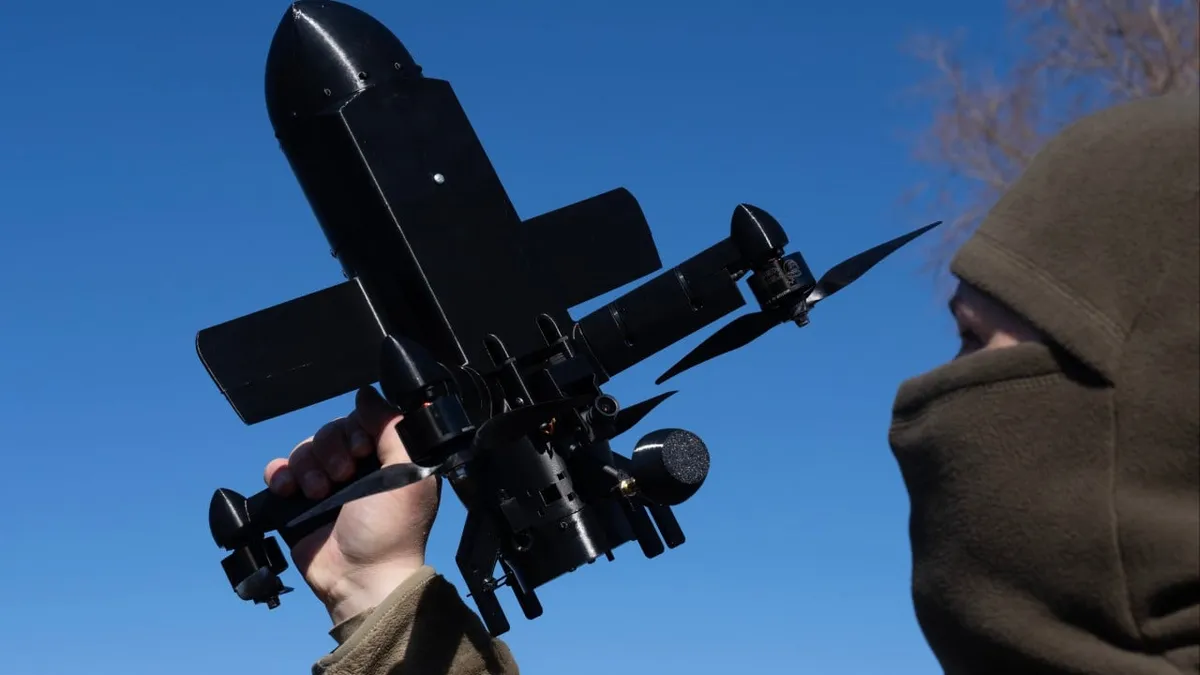
Europe is flexing its muscles and rebuilding its military, which sounds great until you open the supply closet and realize half the critical minerals in there have "Made in China" stamped on the bottom. Awkward.
According to reporting by the South China Morning Post, analysts believe Europe's defence industry will pursue a gradual reduction of its reliance on Chinese supply chains during its ongoing rearmament drive - not the clean, dramatic breakup that some hawks in Brussels and Washington might prefer. Think of it less as a divorce and more as "we're just spending a little less time together."
The G7 summit's most diplomatically worded non-statement
At the Group of Seven summit held in Evian-les-Bains, France this week, leaders from France, Germany, the UK, Italy, the US, Canada and Japan signed a joint declaration on securing supply chains for critical minerals. The document pledged to "significantly reduce" dependency on a "single supplier outside" - a phrase so carefully constructed it could only be referring to one country, which shall not be named, but rhymes with "Shmy-na."
The timing is no coincidence. Europe's rearmament push has supercharged demand for the raw materials that go into everything from artillery shells to fighter jets, and the uncomfortable reality is that China dominates global production and processing of many of the minerals needed to build them.
Why a full decoupling is basically a fantasy
Analysts cited in the SCMP report throw some cold water on the idea of a clean split. Completely cutting out Chinese supply chains from Europe's military-industrial complex would be enormously expensive, painfully slow, and logistically nightmarish. The global rare earth supply chain, in particular, runs through China like a main artery - you can't just reroute it over a summit weekend in the French Alps.
Instead, what's more likely is a slow diversification strategy - building up alternative suppliers in friendly nations, investing in domestic processing capacity, and gradually shifting purchasing decisions. Think years, possibly decades. Not exactly the swift pivot that the current geopolitical temperature seems to demand.
The irony hiding in plain sight
There is something almost poetic about European nations racing to rearm partly in response to a more assertive and unpredictable global order, while simultaneously depending on one of the key drivers of that unpredictability for the minerals to make their weapons. It is the geopolitical equivalent of buying a home security system from the person you're locking the door against.
Whether the G7 declaration translates into meaningful supply chain shifts or remains a strongly worded piece of expensive paper remains to be seen. But one thing is clear: Europe's road to strategic autonomy runs straight through a very complicated mineral map.