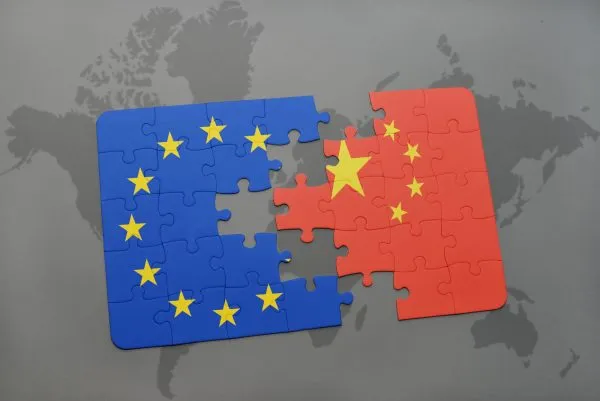
According to a new analysis published in The Diplomat, the European Union has a China problem - and it's not just the trade deficit or the solar panels flooding the market. It's the narrative, or rather, the complete lack of one that doesn't sound like a passive-aggressive note left on the fridge.
The argument, laid out plainly, is this: Brussels has been so focused on reducing security vulnerabilities in its economic relationship with China that it forgot to explain to anyone, including itself, what it actually wants the relationship to look like. De-risking without a positive vision is just slow-motion decoupling dressed up in diplomatic language.
What's actually going on here?
The EU has spent considerable energy building policies aimed at reducing dependency on Chinese supply chains, screening foreign investments, and pushing back on what it sees as unfair trade practices. All of that is reasonable stuff. But according to The Diplomat's analysis, those moves are getting lost in a fog because they're not embedded within any kind of strategically coherent, forward-looking story.
In other words: you can't just tell voters and trade partners what you're against. At some point you have to explain what you're actually for.
The piece argues that Europe needs a new framework - one that acknowledges China as a competitor and a systemic rival without completely torching the possibility of cooperation on issues where interests genuinely overlap, think climate change, pandemic preparedness, or keeping global trade from completely falling apart under the weight of US-China tensions.
Why this matters more than it sounds
This isn't just Brussels navel-gazing. With the US increasingly unreliable as a strategic anchor under shifting administrations, and China aggressively courting European capitals on a bilateral basis, the EU risks getting played from both sides if it can't articulate a coherent position.
A purely defensive posture - block this, screen that, diversify away from everything - might look decisive on paper but it leaves European businesses confused, partner countries unimpressed, and Beijing with room to paint the EU as a protectionist bloc hiding behind security language.
The bottom line
The Diplomat's analysis essentially makes the case that smart de-risking requires good storytelling. Europe needs to stop sounding like it's just reacting to whatever Washington or Beijing does next, and start sounding like it actually has a plan.
Whether Brussels can pull that off before the next trade dispute, election cycle, or geopolitical shock scrambles the whole chessboard again is, of course, another question entirely.