You would think that a tropical archipelago drenched in sunlight, sitting on top of a volcano, and surrounded by endless ocean wind would have cracked the clean energy code by now. And yet, according to a report by DW, Hawaii remains one of the most fossil fuel-dependent states in the entire United States - importing the vast majority of its oil from abroad and paying some of the highest energy prices in the country as a direct result.
So what's going on?
The core problem is geography. Being a chain of islands in the middle of the Pacific means there are no pipelines, no interstate power grids, and no convenient neighbors to borrow electricity from when things get tight. Every barrel of oil has to be shipped in, and shipping things across an ocean is, shockingly, not cheap. Residents and businesses end up footing an electricity bill that can be nearly double the US mainland average.
The irony is almost physically painful. Hawaii sits on geothermal energy from active volcanoes, gets bombarded with solar radiation year-round, and has consistent trade winds that make wind energy a viable option. The islands are basically a clean energy buffet that keeps ordering delivery pizza.
The escape plan
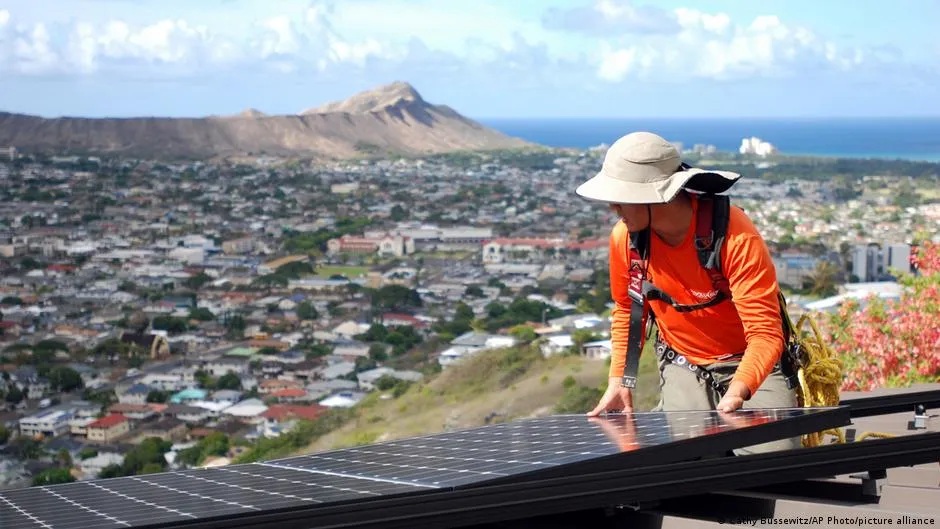
Hawaii is not exactly sitting on its hands, though. According to DW's reporting, the state has set an ambitious target of reaching 100% renewable electricity by 2045 - one of the most aggressive clean energy mandates in the US. Solar adoption has accelerated significantly, and geothermal energy from the Big Island's volcanic activity is being explored as a baseload power source that, unlike solar, doesn't disappear when the sun goes down.
The challenges are real, however. Battery storage technology needs to scale up dramatically to handle intermittent solar and wind. Grid infrastructure across multiple islands is expensive to upgrade. And the transportation sector - ships, planes, and cars - remains heavily dependent on liquid fuels that are much harder to replace than grid electricity.
The stakes
This isn't just a local quirk. Hawaii's energy situation is essentially a stress test for what island nations and remote communities worldwide face as they try to transition away from fossil fuels. If Hawaii, with its political will, legal mandates, and natural renewable resources, struggles to make the shift - that tells you something important about the size of the challenge globally.
The good news is that momentum is building. The bad news is that every year of delay means more oil tankers making the long journey to paradise, and more residents grimacing at their monthly power bills.