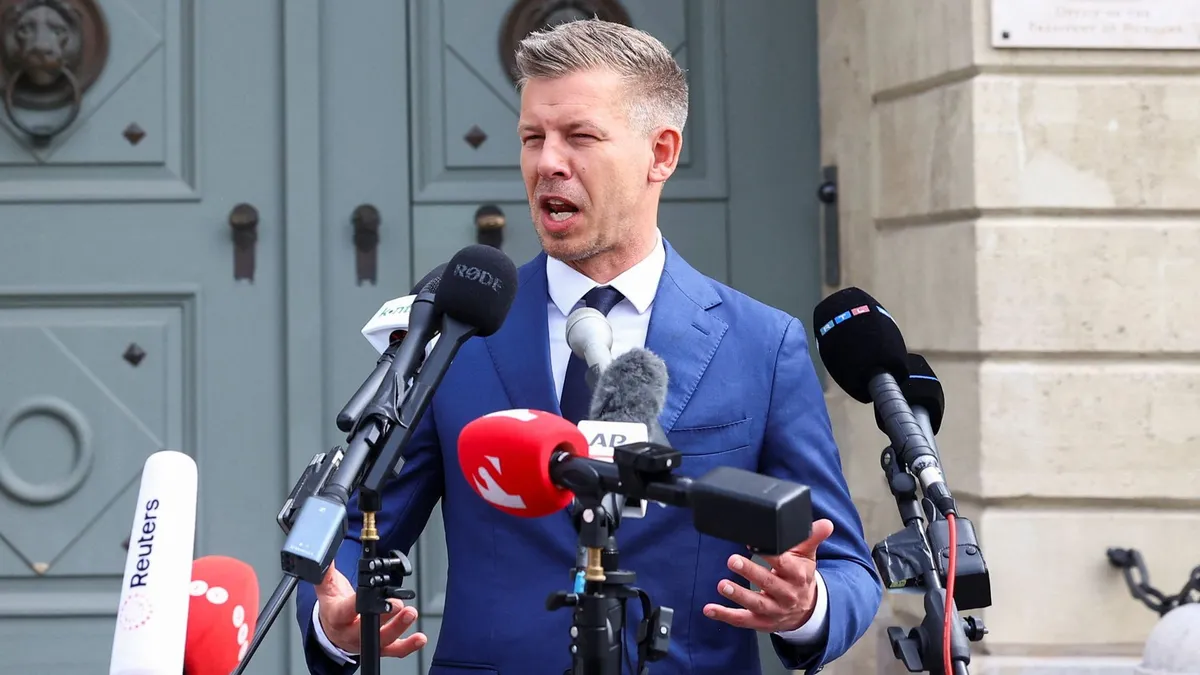
Hungary's incoming prime minister has publicly called on the country's president to step down, describing the head of state as "unworthy" of the office and demanding a rapid transition of power away from the government of Viktor Orban, a close ally of Russian President Vladimir Putin.
The demand was reported by Sky News and signals a sharp break from the political establishment that has governed Hungary for more than a decade under Orban, whose government has maintained close ties with Moscow even as much of Europe has moved to isolate Russia following its invasion of Ukraine.
A direct challenge to the political establishment
The incoming premier did not hold back in his assessment of the current president, using the word "unworthy" to characterize the officeholder's fitness to continue in the role. The call for resignation represents an early and assertive move by the new leadership to distance itself from figures associated with the outgoing Orban era.
The demand for a swift handover of power suggests the incoming government intends to move quickly to consolidate authority and implement what is expected to be a significant shift in Hungary's domestic and foreign policy orientation.
Context: Hungary's political landscape
Viktor Orban has led Hungary for over 15 years across two separate stints in power and has cultivated a uniquely close relationship with the Kremlin among European Union member states. His government's resistance to EU sanctions on Russia and his maintenance of energy ties with Moscow have repeatedly put Budapest at odds with Brussels and other European capitals.
The election of a new prime minister represents a potential turning point for Hungary's role within the European Union and its broader foreign policy posture. Observers across Europe have watched the transition closely, given Hungary's strategic position within the bloc and its repeated use of veto powers to block EU-wide measures related to the war in Ukraine.
What comes next
The calls for the president's resignation and the push for a fast transition of power indicate the new leadership is keen to avoid a prolonged period of political ambiguity. Whether the president will comply with the demand or resist pressure to vacate the office remains to be seen.
The incoming government's early moves will be closely watched both domestically and by European partners who have long sought a change in Budapest's stance on Russia and EU cooperation.