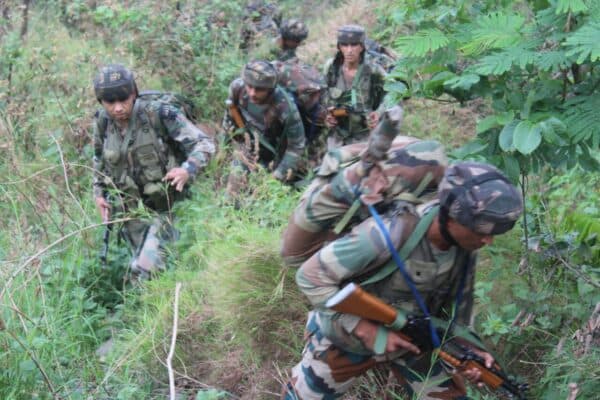
India is significantly expanding its military infrastructure in the country's northeast region, with authorities describing the effort as proceeding on a war footing, according to a report by The Diplomat.
The upgrades are concentrated along and near the Siliguri Corridor, a narrow stretch of land roughly 20 kilometers wide that connects India's northeastern states to the rest of the country. The corridor, sometimes called the Chicken's Neck, is considered one of India's most strategically vulnerable geographic points, bordered by Nepal, Bangladesh, and Bhutan, and lying in proximity to China.
Scale and urgency of the buildup
The Diplomat reports that external threats have driven New Delhi to accelerate what would otherwise be routine infrastructure development. The upgrades are said to include improvements to roads, air strips, and logistical facilities that would support rapid military mobilization in the region.
The northeastern states have long been considered a strategic priority given their geographic isolation and proximity to both China and Bangladesh. However, the current pace of development marks a notable escalation in the urgency with which Indian authorities are approaching the region's defense posture.
Regional context
India and China share a long disputed border in multiple sectors, and tensions between the two countries have remained elevated since a deadly clash in the Galwan Valley in 2020. That confrontation, which resulted in casualties on both sides, prompted India to substantially increase defense spending and fast-track border infrastructure projects across several frontier zones.
The Siliguri Corridor holds particular strategic weight because any disruption to it would effectively sever land connectivity between India's northeastern states - Assam, Meghalaya, Arunachal Pradesh, Nagaland, Manipur, Mizoram, and Tripura - and the rest of the country. Military planners have historically regarded securing this corridor as a top priority in any conflict scenario involving the region.
Broader implications
The infrastructure push reflects a wider pattern across South Asia, where multiple nations have increased defense expenditure and border fortification efforts amid shifting regional alignments. India's moves in the northeast come alongside similar Chinese infrastructure development on the other side of the disputed Line of Actual Control.
The Diplomat's reporting does not specify which particular external threats Indian authorities have cited as the primary driver of the current acceleration, but the combination of the China factor and evolving dynamics with neighboring states has kept the northeast firmly in focus for Indian defense planners.
Details on the full scope, budget, and projected completion timeline of the infrastructure projects were not immediately available from the source material.