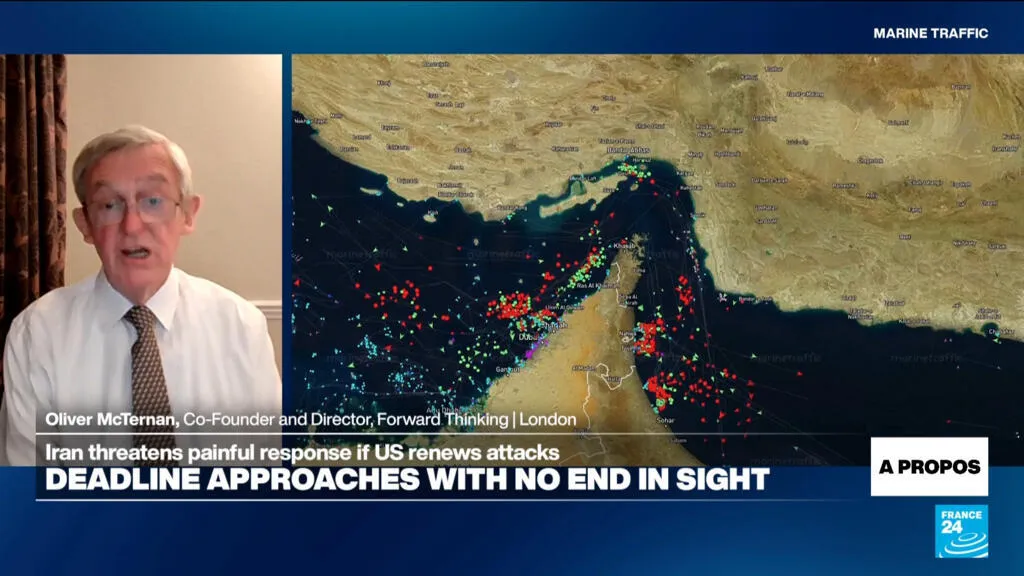
In what is shaping up to be the geopolitical equivalent of two people arguing over a parking spot with nuclear undertones, Iran's supreme leader declared Thursday that the United States had suffered a - and we're quoting here - "shameful defeat." This came hot on the heels of President Donald Trump warning that a punishing US naval blockade could stick around for months. Iran's response, in diplomatic terms, was essentially: "Cool story, bro."
Speaking with France 24's Sharon Gaffney, Oliver McTernan, director and co-founder of the conflict resolution think tank Forward Thinking, did not mince words about how this whole situation got started.
"Iran will not capitulate," McTernan told France 24, adding that "it was a miscalculation rushing in an illicit aggression against Iran."
Translation for the people in the back: someone stepped on a rake, and now everyone is pretending it was a strategic chess move.
Why a naval blockade is easier said than done
Trump's blockade threat is designed to squeeze Iran's economy until it cries uncle - but McTernan's assessment suggests that strategy fundamentally misreads how Iran operates under pressure. Historically, external economic punishment has tended to consolidate domestic support around Iranian leadership rather than fracture it. Squeezing a country that has already been under heavy sanctions for decades is a bit like threatening to make someone's cold shower even colder.
Iran's supreme leader, doubling down on defiance, framed the standoff as a victory narrative for domestic consumption - a move that makes any quiet diplomatic off-ramp significantly harder to find without someone losing face.
The "miscalculation" problem
McTernan's pointed use of the word "miscalculation" is doing a lot of heavy lifting here. Conflict resolution experts don't usually throw that term around casually - it signals that, in their professional assessment, whoever moved aggressively first did not properly game out the consequences. According to his analysis as reported by France 24, the aggression was not only strategically dubious but legally questionable, described as "illicit."
That's a rough combo: legally sketchy AND strategically counterproductive. A two-for-one special nobody wanted.
With a blockade potentially stretching for months and Iran publicly vowing no capitulation, the path forward looks less like a negotiating table and more like two stubborn goats on a very narrow bridge. Conflict resolution experts exist precisely for moments like this - the question is whether anyone in the room is actually listening.
Source: France 24 / Forward Thinking