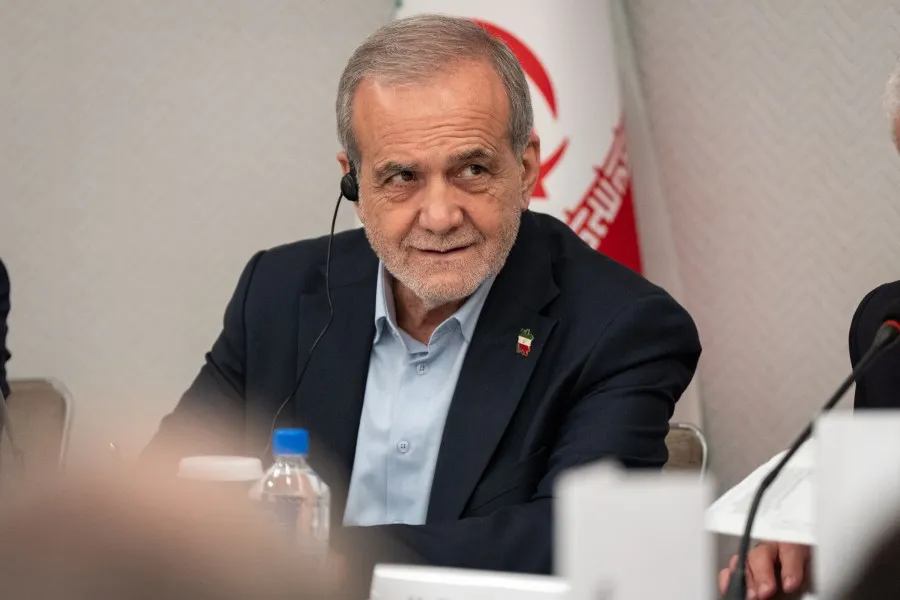
Iranian President Masoud Pezeshkian acknowledged persistent distrust toward Washington on Monday, even as the two countries prepare to enter a second round of diplomatic talks aimed at resolving the long-running dispute over Iran's nuclear program.
Writing on the social platform X, Pezeshkian said that "deep historical mistrust in Iran toward U.S. government" remains a significant obstacle, while also stating that "honoring commitments is the basis of meaningful dialogue," according to reporting by The Hill.
The comments arrive ahead of negotiations set to take place in Islamabad, Pakistan, marking the second formal round of discussions between the two sides. The talks represent a rare attempt at direct or near-direct engagement between Washington and Tehran, two governments that have not maintained formal diplomatic relations since the 1979 Islamic Revolution.
Context of the negotiations
The United States and Iran have a deeply strained relationship shaped by decades of conflict over sanctions, regional influence, and Iran's nuclear ambitions. Western governments and international watchdogs have long expressed concern that Iran's uranium enrichment program could be directed toward developing nuclear weapons - a charge Tehran has consistently denied, insisting its nuclear activities are for civilian energy purposes.
Previous diplomatic efforts, most notably the 2015 Joint Comprehensive Plan of Action, collapsed after the United States withdrew from the agreement in 2018 under the Trump administration. Subsequent attempts to revive the deal have repeatedly stalled.
Signals from Tehran
Pezeshkian's public statement ahead of the Islamabad talks appears to serve a dual purpose - signaling Iran's willingness to engage while also managing domestic expectations and placing the burden of trust-building on the American side. His reference to "honoring commitments" is widely understood as an allusion to the US exit from the 2015 nuclear deal.
The choice of Pakistan as a venue reflects the continuing difficulty of finding neutral ground acceptable to both parties, as direct talks on American or Iranian soil remain politically untenable for either government.
No further details about the agenda or the specific format of the Islamabad talks were included in the source material. The outcome of this second round of negotiations is expected to signal whether a broader framework agreement remains achievable in the near term.