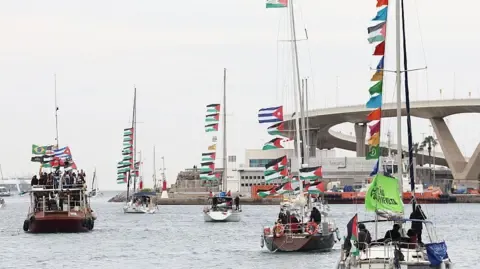
In a maritime showdown that reads like a geopolitical thriller with a side of humanitarian drama, Israeli forces intercepted the Global Sumud Flotilla before it could reach Gaza, detaining activists aboard and sparking an immediate war of words over who exactly is the villain in this story.
According to BBC reporting, Israel released most of the activists - who were largely of Greek nationality - but held on to two of them. The interception took place at sea, with Israeli authorities boarding the vessels and redirecting them away from their intended destination.

Piracy? PR stunt? Why not both?
The two sides could not be further apart in how they frame what happened. The Global Sumud Flotilla wasted no time calling the interception outright piracy - a spicy legal accusation that, if taken seriously in an international court, would be quite the diplomatic headache for Israel.
Israel's foreign ministry, not to be outdone in the rhetoric department, fired back by dismissing the entire flotilla as a "PR stunt" - which, to be fair, is exactly what a country that just intercepted an aid boat in international waters would say.
What both sides agree on, at least implicitly, is that this was never really just about boats.
The bigger picture
The flotilla was attempting to bring aid into Gaza amid the ongoing conflict, which has made humanitarian access to the territory one of the most contested and emotionally charged issues in the current crisis. Aid groups and international observers have repeatedly raised concerns about the flow of supplies into Gaza, while Israel maintains strict control over what enters the territory for security reasons.

Flotilla efforts to break that blockade have a long and fraught history - most notably the 2010 Mavi Marmara incident, which left ten activists dead and triggered a major international incident. This latest interception, while less violent, is another chapter in that ongoing standoff.
What happens to the two still detained?
As of the BBC's reporting, two activists remained in Israeli custody. Their nationalities and the specific grounds for their continued detention were not immediately detailed, and the situation was still developing.
The Global Sumud Flotilla has not indicated it plans to go quietly on the matter - calling the interception piracy suggests they are gearing up for a legal and political fight rather than simply heading home.
Whether this ends up being remembered as a bold act of humanitarian resistance or an elaborate media operation - or, knowing how these things tend to go, both simultaneously - probably depends entirely on which news channel you happen to be watching.