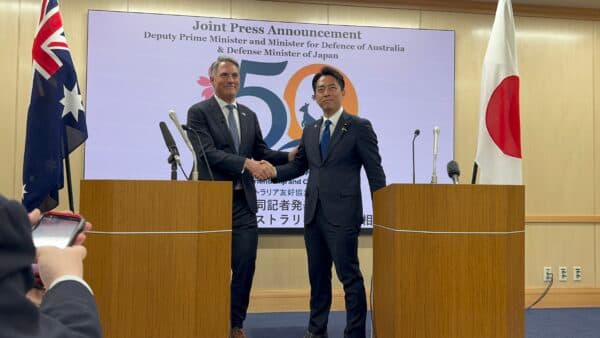
Japan and Australia are intensifying their bilateral defense relationship as both nations navigate a complex security environment marked by North Korean missile activity, ongoing Middle East turmoil, and broader strategic competition in the Indo-Pacific region, according to reporting by The Diplomat.
The deepening partnership reflects a shared recognition between Tokyo and Canberra that overlapping international crises are placing new demands on regional security frameworks. Officials from both countries have pointed to the need for closer coordination as threats multiply across different theaters simultaneously.
A partnership under pressure
North Korea's continued missile testing program has remained a persistent source of concern for Japan, which lies within range of Pyongyang's ballistic missiles. Australia, while geographically more distant from the Korean Peninsula, has increasingly framed regional stability as a core national security interest.
The instability in the Middle East has added another layer of complexity, with both nations monitoring potential disruptions to global shipping lanes and energy supplies that pass through critical chokepoints connecting the region to Asia.
Strategic context
Japan and Australia have progressively built out their security cooperation over recent years, formalizing arrangements that go beyond traditional alliance structures centered on the United States. The two countries signed a Reciprocal Access Agreement in 2022, which allows each nation's military forces to operate on the other's soil - a landmark step that marked a significant deepening of ties.
Both nations are also members of the Quad, the informal security grouping that also includes the United States and India, which has focused attention on a free and open Indo-Pacific. Analysts have noted that bilateral relationships within the Quad carry their own strategic weight, independent of the broader grouping.
Broader implications
The strengthening of Japan-Australia defense ties comes as middle powers across the Indo-Pacific reassess their security postures. For Japan, which has undertaken a significant expansion of its defense capabilities and budget in recent years under revised national security guidelines, partnerships with like-minded democracies have taken on greater importance.
Australia, meanwhile, has been reshaping its defense investments through initiatives including the AUKUS submarine partnership with the United States and the United Kingdom, signaling a long-term commitment to enhanced military capability in the region.
The Diplomat, which covers Asia-Pacific affairs, described the current moment as one defined by overlapping crises and intensifying strategic competition, suggesting the bilateral relationship between Japan and Australia will continue to evolve in response to the shifting security landscape.