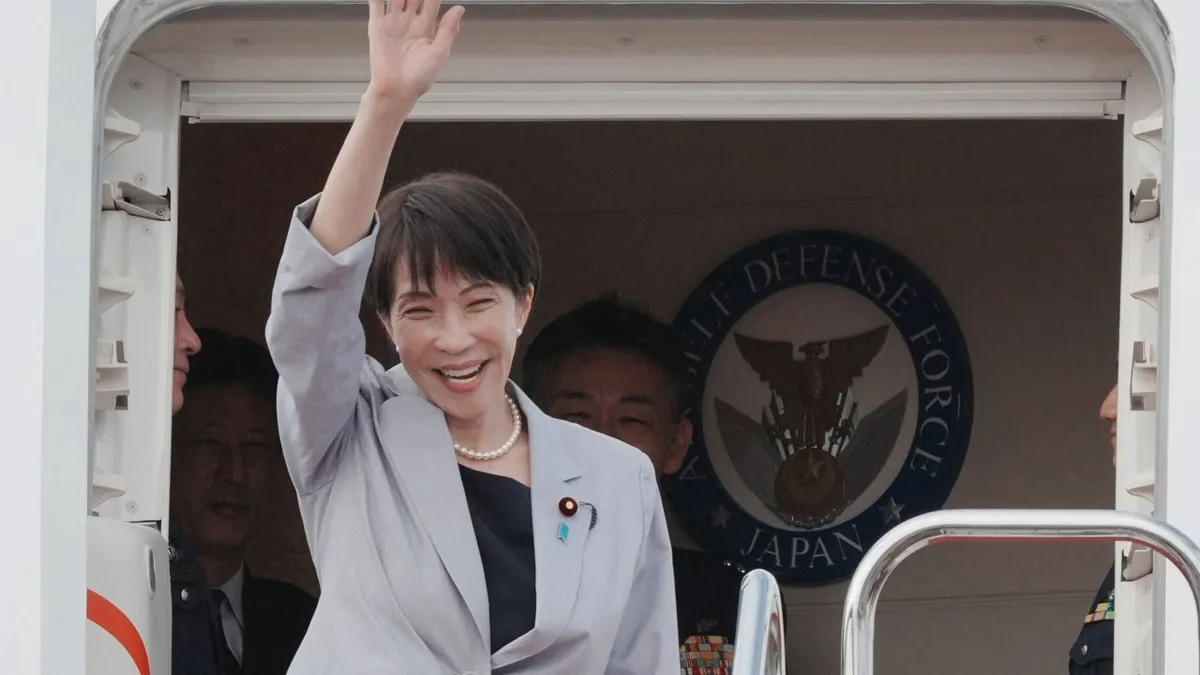
Japan's Prime Minister Sanae Takaichi is touching down in Canberra late Sunday for a three-day visit that is essentially two nervous neighbors agreeing to hold hands a little tighter while eyeing the changing geopolitical weather.
According to the South China Morning Post, the visit will zero in on three big-ticket items: defence cooperation, critical minerals, and broader economic security. In other words, the agenda reads like a checklist for countries that are quietly but very seriously stress-testing their alliances.
Why now, and why Australia?
Takaichi's Canberra stop comes hot on the heels of a regional tour that included Vietnam, where she laid out an updated strategic vision for Japan's role in the Indo-Pacific. Australia, one of Tokyo's closest and most trusted partners, is the natural next port of call when you're in the business of coalition-building.
The two countries have reportedly grown increasingly uneasy about the shifting security and economic environment in the region - a diplomatic way of saying that both Canberra and Tokyo are watching the same headlines and arriving at similar conclusions.
Critical minerals - the unsexy topic that everyone suddenly cares about
If defence is the headline act, critical minerals might be the surprisingly gripping opening set. Australia sits on enormous reserves of the rare earths and minerals that are essential for everything from electric vehicles to advanced weaponry. Japan, a manufacturing powerhouse with limited domestic resources, needs a reliable supply chain that doesn't run through potentially complicated third-party routes.
Their mutual interest in locking down those supply chains makes this visit as much an economic negotiation as a security one - the two are increasingly inseparable anyway.
The bigger picture
Japan and Australia are both members of the Quad alongside the United States and India, and both have been quietly but steadily deepening military and intelligence cooperation in recent years. Takaichi's visit signals a continuation of that trend rather than any dramatic new departure.
Still, in a region where the strategic furniture keeps getting rearranged, a three-day diplomatic visit with a packed agenda is not nothing. Two mid-sized powers - by global standards - making sure their relationship is airtight is exactly the kind of low-drama, high-stakes diplomacy that rarely goes viral but genuinely matters.
No word yet on whether they'll sort out the entire Indo-Pacific security architecture over a Canberra dinner, but one can dream.