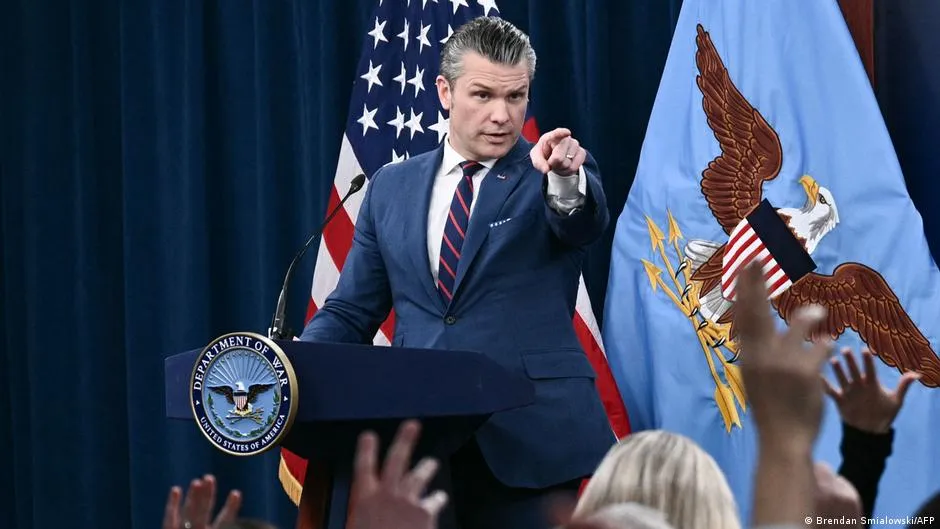
In what legal scholars might call a "yeah, you actually have to follow orders" moment, a federal judge has ruled that the US Department of Defense is not complying with previous court orders to restore journalist access to the Pentagon, according to Deutsche Welle.
So what exactly is going on?
The Pentagon introduced rules requiring reporters to be escorted inside the building - a policy that press freedom advocates and journalists immediately flagged as a significant barrier to independent reporting on the US military. You know, the institution with a budget larger than the GDP of most countries.
The problem, at least according to the federal court, is that this escort-only policy directly contradicts standing orders to restore the kind of press access that journalists previously enjoyed. In other words, the Defense Department has been told to fix this - and a judge has concluded they have not actually fixed it.
Why does this matter beyond the obvious?
Pentagon correspondents are not your average beat reporters covering city council meetings. They cover troop deployments, weapons procurement, military strategy, and the kind of decisions that affect global stability. Requiring a government escort to move around the building is, as critics have argued, a pretty effective way to chill independent journalism without technically banning it outright.
Think of it this way: imagine having to bring a chaperone every time you tried to ask your boss an awkward question. The chaperone is your boss's friend. You see the problem.
What happens now?
The court's finding puts additional legal pressure on the Pentagon to actually comply with the original access restoration orders. Whether the Defense Department moves quickly to address this or continues to drag its feet remains to be seen - but the judiciary has now formally noted the non-compliance, which is not a great look for an institution that technically works for a government built on the rule of law.
Press freedom organizations have been watching this situation closely, viewing it as part of a broader pattern of tension between the current administration and the media. The Pentagon has not been the only federal institution accused of limiting press access in recent months.
For now, the journalists waiting in the lobby - presumably with their little visitor badges and their unanswered questions - will have to keep waiting to see if anyone in the building actually listens to the judge.