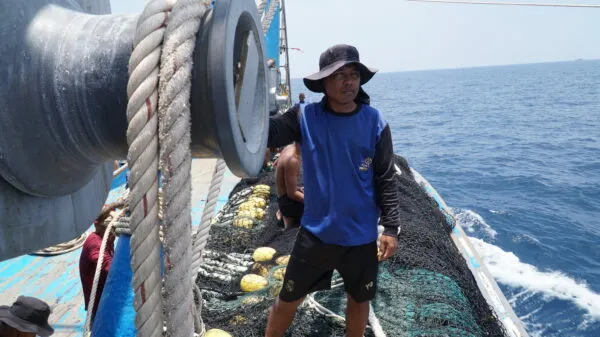
Migrant workers employed in Southeast Asia's fishing and seafood industries remain highly vulnerable to labor abuses, with conditions aboard the region's fishing trawlers continuing to raise serious concerns, according to a report published by The Diplomat.
The fishing industry across Southeast Asia relies heavily on migrant labor, often drawn from poorer neighboring countries. Advocates and researchers say these workers frequently face dangerous working conditions, excessive working hours, withheld wages, and in some cases, physical abuse - with little access to legal protection or recourse.
A regulatory gap at sea
A central problem identified is the lack of effective oversight of fishing vessels operating in the region. Unlike land-based industries, maritime operations are significantly harder to monitor and regulate, allowing labor abuses to persist with limited accountability for vessel owners and operators.
Workers aboard these vessels can spend months at sea, cut off from communication with families and unable to leave their employment, conditions that human rights organizations have compared to forced labor in some documented cases.
Regional patterns of vulnerability
Countries including Thailand, Indonesia, and Myanmar have been identified as key nodes in a broader system that can expose migrant workers to exploitation. Thailand in particular has faced sustained international scrutiny over labor practices in its seafood supply chain, which exports products to markets in Europe, North America, and elsewhere.
Recruitment debt - where workers take on loans to pay fees to labor brokers in order to secure employment - is widely cited as a mechanism that traps workers in exploitative situations. Once indebted, workers have little power to negotiate conditions or walk away from abusive employers.
Supply chain implications
The issue carries implications beyond the region, as seafood harvested under potentially abusive labor conditions enters global supply chains and reaches consumers in wealthy nations. Importers and retailers in Western markets have faced growing pressure from regulators and civil society groups to verify the labor standards of their suppliers.
Some governments have introduced import controls targeting goods suspected of being produced with forced labor, though enforcement remains inconsistent and documentation requirements are difficult to meet across complex supply chains.
The Diplomat's reporting underscores that despite years of advocacy and incremental policy changes, the structural conditions enabling labor abuse in the sector - weak regulation, limited worker mobility, and demand for cheap seafood - remain largely intact across much of the region.