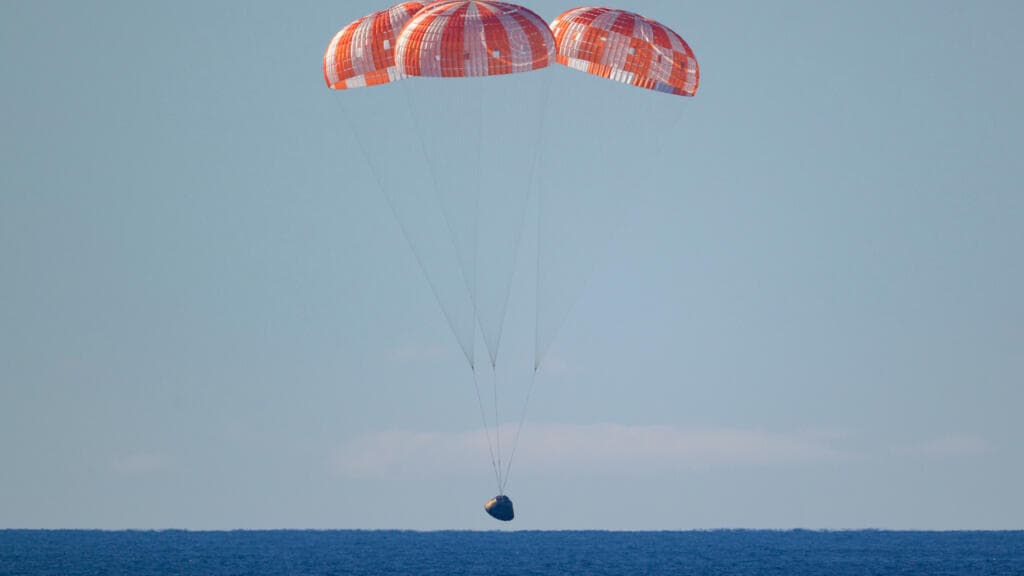
The four astronauts aboard NASA's Artemis II mission are preparing to return to Earth on Friday evening, concluding a voyage of more than nine days that took them around the moon, according to NPR.
The crew is scheduled to complete the mission with a splashdown in the Pacific Ocean off the coast of San Diego, California, marking the end of the first crewed lunar flyby since the Apollo era.
A milestone for crewed lunar exploration
The Artemis II mission represents a significant step in NASA's broader Artemis program, which aims to return humans to the lunar surface. This flight sent a crew around the moon without landing, serving as a critical test of the Orion spacecraft and its systems under real deep-space conditions with humans aboard.
The mission follows Artemis I, an uncrewed test flight conducted in late 2022, and is intended to pave the way for Artemis III, which is planned to achieve an actual lunar landing.
Splashdown and recovery
Recovery teams are expected to be positioned off the San Diego coast to retrieve the crew following their re-entry into Earth's atmosphere. Splashdown operations of this kind involve extensive coordination between NASA and U.S. Navy assets to ensure the safe retrieval of both the capsule and the astronauts.
Re-entry from a lunar-distance mission subjects the spacecraft to higher velocities than those experienced returning from the International Space Station, making the heat shield and re-entry systems critical components of the mission's final phase.
What comes next
Data gathered from the Artemis II flight, including crew health information and spacecraft performance metrics, will inform preparations for future Artemis missions. NASA has stated that the program's long-term goals include establishing a sustained human presence near and on the moon, partly in support of eventual missions to Mars.
The successful return of the crew would signal that the Orion capsule and Space Launch System are capable of supporting human spaceflight beyond low Earth orbit, a capability the United States has not demonstrated since the final Apollo mission in 1972.