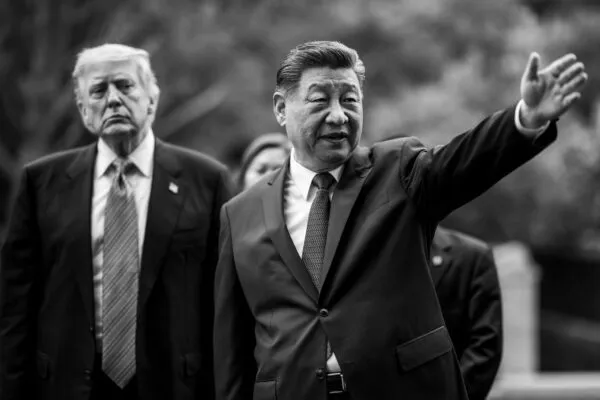
While the world obsessed over what Donald Trump and Xi Jinping would actually say to each other at their Beijing summit, one country was watching with a very particular kind of nervous energy: Pakistan. According to an analysis published by The Diplomat, Islamabad finds itself in the classic Global South predicament - deeply invested in both Washington and Beijing, and desperately hoping the two don't force it to pick a side.
The ultimate diplomatic third-wheel situation
Pakistan's relationship with China is practically ancient by modern geopolitical standards. The China-Pakistan Economic Corridor (CPEC) alone represents tens of billions of dollars in Chinese investment, making Beijing one of Islamabad's most critical economic partners. Meanwhile, the US remains a key player in Pakistan's security calculus and international financial standing, not least through institutions like the IMF where American influence is hard to overstate.
So when two of Pakistan's most important frenemies sit down in the same room, Islamabad is essentially watching its parents have a tense conversation about the family budget.
What Global South countries actually want from US-China summits
The Diplomat's analysis notes that Pakistan - like many Global South nations - is not interested in choosing camps in a new Cold War. The preferred outcome is a world stable enough for multi-directional cooperation to function. A Trump-Xi summit that even marginally reduces bilateral hostility is, from this perspective, a win for Islamabad before a single word about Pakistan is even uttered.
The concern, of course, is the opposite scenario: a summit that hardens positions, increases economic decoupling, or produces frameworks that pressure third countries to align. For a nation that has historically walked diplomatic tightropes with Olympic-level balance, that kind of outcome would be genuinely painful.
Can Islamabad actually pull this off?
Pakistan's track record of hedging between great powers is impressive if occasionally precarious. It has hosted US drone operations while cozying up to Beijing. It has taken IMF bailouts while signing CPEC deals. Whether this balancing act remains viable in an increasingly polarised world is the real question the summit raises - and one that the Beijing talks are unlikely to fully answer.
As The Diplomat frames it, the summit's value for Pakistan lies less in any specific outcome and more in what it signals about whether US-China relations can be managed at all. A world with functional great-power diplomacy is simply a better operating environment for a country that has staked its strategy on not having to choose.
In short: Pakistan doesn't need Trump and Xi to become best friends. It just needs them to stop flipping tables.