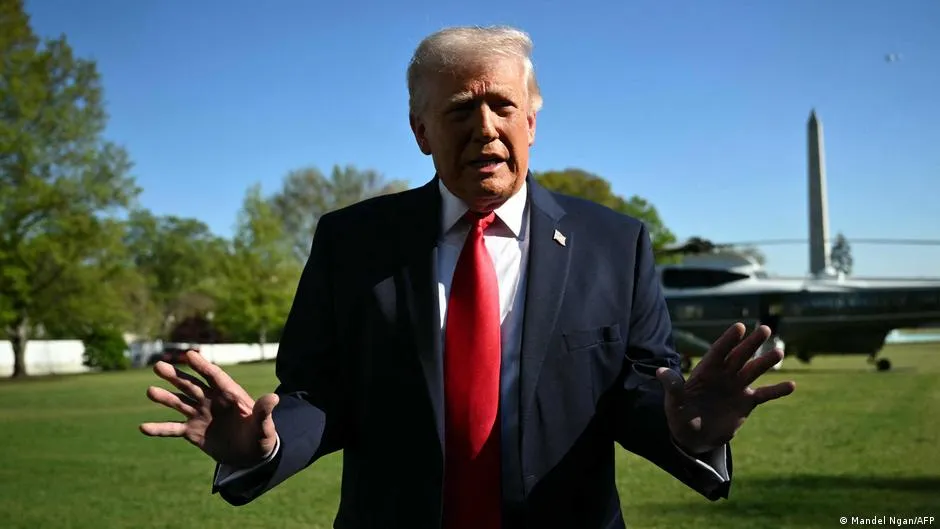
A series of provocative statements and actions by President Donald Trump has renewed debate in Washington over whether mechanisms exist to remove a sitting president deemed unfit for office, according to reporting by Deutsche Welle.
The renewed scrutiny follows several high-profile incidents, including Trump threatening to destroy "an entire civilization," a public clash with Pope Francis, and the posting of an AI-generated image depicting himself as Jesus Christ. The combination of these events has prompted questions from both Democratic lawmakers and some Republicans about Trump's capacity to serve.
What the 25th Amendment says
The 25th Amendment to the U.S. Constitution, ratified in 1967, provides a legal framework for addressing presidential incapacity. Section 4 of the amendment is the most relevant provision in this context. It allows the vice president, together with a majority of Cabinet members, to declare the president unable to perform his duties. If invoked, the vice president would assume the role of acting president.
However, the process includes significant safeguards. If the president contests the declaration, Congress must convene and vote within 21 days. Removing the president under this mechanism requires a two-thirds majority in both the House and the Senate - a threshold considered extremely difficult to reach, particularly in the current political environment.
The amendment has never been successfully used to remove a president against his will. It was designed primarily with physical incapacitation in mind, and legal scholars have long debated whether it could apply to questions of mental fitness or erratic behavior.
Political obstacles remain steep
Beyond the constitutional hurdles, political realities make invocation of Section 4 a remote possibility. Trump's Cabinet is composed largely of loyalists, and Republicans hold majorities in both chambers of Congress. Securing the necessary two-thirds votes to override a presidential challenge would require a level of bipartisan consensus that does not currently appear to exist.
Critics of the effort to invoke the amendment argue that political disagreements with a president's decisions or communication style do not meet the constitutional standard of inability to discharge the powers and duties of the office.
Supporters of the inquiry counter that the pattern of behavior warrants at least formal discussion among lawmakers and officials responsible for oversight of the executive branch.
As of now, no formal proceedings have been initiated. The debate remains largely rhetorical, reflecting broader tensions between the Trump administration and its political opponents rather than any imminent constitutional action.