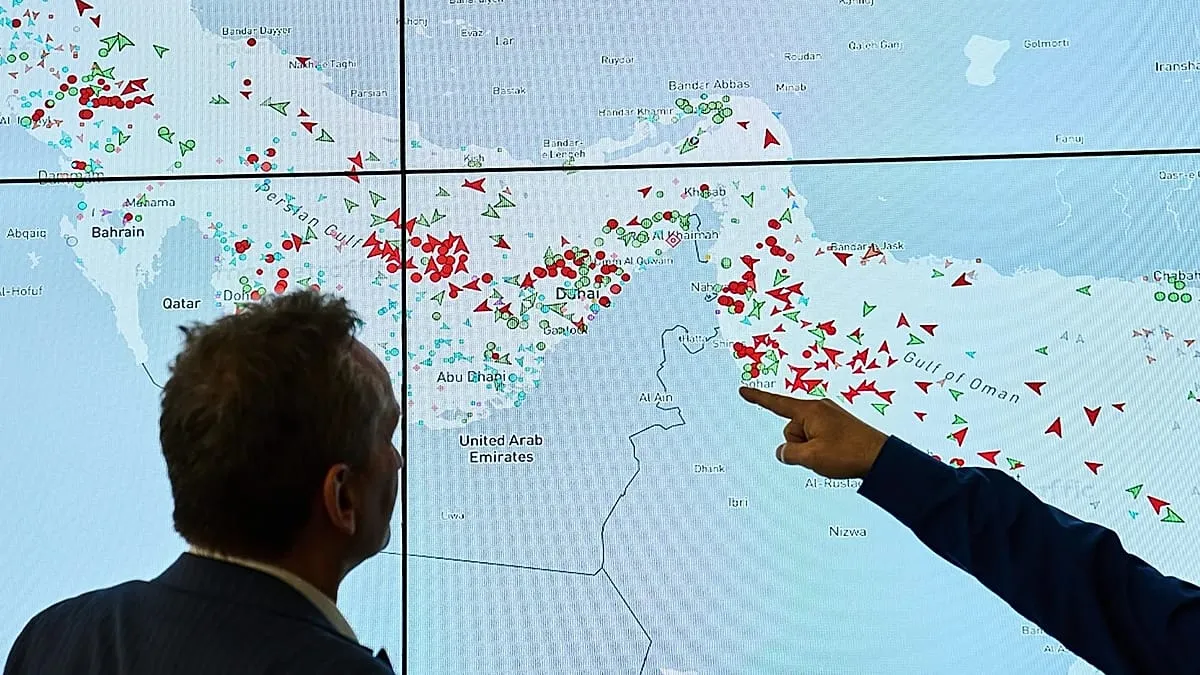
Vessel traffic through the Strait of Hormuz has slowed dramatically as competing blockades by the United States and Iran squeeze shipping through one of the world's most strategically vital waterways, according to marine tracking data cited by France24.
The strait, which connects the Persian Gulf to the Gulf of Oman, serves as a chokepoint for a significant share of global oil and liquefied natural gas shipments. Any sustained disruption to traffic there carries major implications for energy markets worldwide.
What the data shows
Marine tracking figures indicate the number of vessels transiting the strait has fallen to a fraction of normal levels, reflecting the impact of both Washington and Tehran's naval posturing in the region. The competing blockades have created a zone of uncertainty that commercial shipping operators appear to be actively avoiding.
The slowdown represents a significant departure from typical traffic patterns through the strait, which under normal conditions handles the passage of dozens of tankers and cargo vessels each day.

A strategic chokepoint under pressure
The Strait of Hormuz has long been considered one of the most critical maritime corridors in the global energy supply chain. Roughly 20 percent of the world's oil supply passes through the waterway, according to estimates from the US Energy Information Administration.
Iran has repeatedly threatened in past years to close the strait in response to Western economic pressure, while the United States has maintained a naval presence in the broader region to deter such action. The current situation, as reported by France24, reflects a more active confrontation over control of the passage than previous standoffs.
Implications for global energy supply
A prolonged restriction on shipping through the Strait of Hormuz would affect oil exports from major Gulf producers including Saudi Arabia, the United Arab Emirates, Kuwait, and Iraq, as well as Iran itself. Energy analysts have consistently identified the strait as one of the highest-risk points in the global supply chain.
The effect on global oil prices and energy security will depend in large part on how long the current disruption continues and whether alternative shipping routes or reserves can offset reduced flows from the Gulf region.
France24 reported the figures are drawn from marine vessel tracking systems, which monitor ship movements in near-real time using automatic identification system data.