Six decades after one of the twentieth century's deadliest anti-communist campaigns, historians and foreign policy analysts are revisiting the United States' role in Indonesia's 1965-1966 mass killings as Washington once again finds itself accused of interfering in the affairs of nations it deems geopolitically inconvenient, according to reporting by Deutsche Welle.
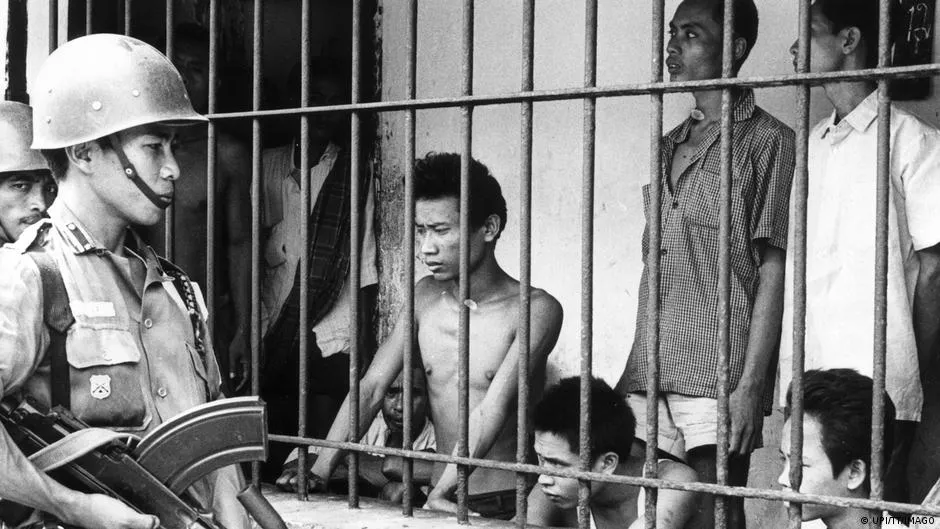
Between 500,000 and one million people were killed in Indonesia following a coup attempt that the Indonesian army, with reported U.S. backing, blamed on the Indonesian Communist Party, known as the PKI. The PKI was at the time one of the largest communist parties outside of the Soviet Union and China. The killings effectively dismantled it and cemented the military dictatorship of General Suharto.
U.S. involvement and Cold War logic
Declassified documents and subsequent investigations have indicated that American officials provided the Indonesian military with lists of suspected communist operatives and offered broader political support for the crackdown. Washington viewed the PKI's influence as a direct threat during the height of Cold War tensions, when containing communism across Southeast Asia was a central pillar of U.S. foreign policy.
The killings remained under-discussed for decades, both in Indonesia and internationally, before a series of academic works, tribunal proceedings, and documentary films brought them to wider attention in the 2010s.
Questions about historical repetition
DW's analysis frames the anniversary within a broader question: whether current U.S. foreign policy behavior, including pressure campaigns, sanctions, and alleged interference in politically sensitive states, reflects a return to Cold War-style logic, now reframed around competition with China and Russia rather than the Soviet bloc.
Critics of American foreign policy argue that the underlying calculus has changed little, with strategic interests continuing to outweigh humanitarian concerns when Washington assesses which governments or movements to support or undermine. Defenders of U.S. policy counter that contemporary engagement operates under far greater scrutiny, legal constraints, and multilateral frameworks than existed in the 1960s.
Indonesia's unresolved reckoning
Within Indonesia itself, a full governmental accounting of the 1965 killings has never taken place. Survivors and descendants have repeatedly called for a formal state apology and truth commission, requests that successive Indonesian governments have resisted.
The anniversary arrives as Indonesia, now the world's fourth most populous nation and a significant regional power, navigates its own complex relationships with both Washington and Beijing, underlining how the legacies of Cold War interventions continue to shape present-day geopolitics.
The question of whether history is repeating itself, as DW poses it, remains a matter of ongoing debate among scholars, policymakers, and survivors alike.