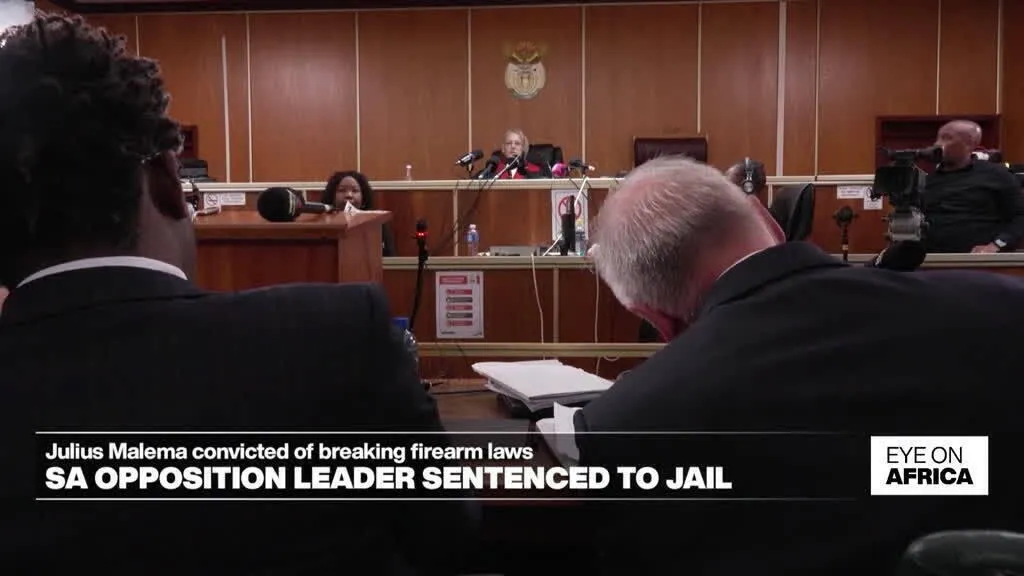
Julius Malema, the leader of South Africa's radical leftist Economic Freedom Fighters (EFF) party and one of the country's most prominent opposition figures, has been sentenced to five years in prison after being convicted of firearm-related offences, according to France 24.
The sentencing represents a dramatic development for a politician who has long been a polarising force in South African public life. Malema, known for his firebrand rhetoric and calls for land expropriation without compensation, built the EFF into a significant parliamentary force since founding it in 2013 after his expulsion from the ruling African National Congress youth league.
A conviction with political implications
The firearm charges and resulting five-year sentence will have immediate consequences for Malema's political future and the EFF's position within South Africa's opposition landscape. South African law places restrictions on convicted individuals holding public office, raising questions about the party's leadership and electoral strategy going forward.

The EFF has positioned itself as a voice for South Africa's poor and economically marginalised, frequently clashing with the ANC government and, more recently, with the Democratic Alliance as part of the broader opposition dynamics following the 2024 elections that produced a national unity government.

Pope Leo visits Cameroon, condemns exploitation
In other news covered by France 24, Pope Leo made a visit to Cameroon where he publicly condemned what he described as "tyrants" responsible for driving global conflicts and the ongoing exploitation of Africa's natural resources. The remarks reflect growing concern within the Catholic Church over geopolitical instability and economic extraction on the African continent.
New database enters restitution debate
France 24 also reported on the emergence of a new online database that is adding fresh momentum to debates over the restitution of African cultural artefacts and other assets held in Western institutions. The database is described as a tool that could reshape how governments, museums, and communities approach claims for the return of historical objects and resources taken during the colonial era.
These three stories together reflect the intersection of political accountability, religious diplomacy, and post-colonial reckoning that continues to define much of Africa's relationship with its own institutions and with the wider world.