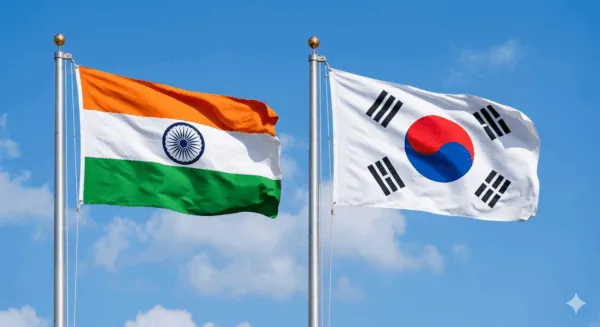
South Korea is signaling a renewed strategic interest in India, with President Lee's upcoming visit expected to mark a significant shift after roughly ten years of relatively subdued bilateral relations, according to an analysis published by The Diplomat.
The two countries have maintained formal diplomatic ties for decades, but interactions over the past ten years have remained limited in scope, falling short of the deeper partnerships South Korea has pursued with other major economies in the Indo-Pacific region.
Why the relationship stalled
Despite shared interests in trade, technology, and regional security, India and South Korea have struggled to translate those overlapping priorities into concrete diplomatic momentum. Analysts suggest that competing foreign policy focuses - South Korea's preoccupation with the Korean Peninsula and India's own complex regional calculus - contributed to the relative stagnation.
What the visit is expected to accomplish
President Lee's visit is being framed as an opportunity to reset the bilateral relationship and elevate it to a more substantive strategic level. The Diplomat's analysis suggests the visit could lay the groundwork for stronger cooperation in areas such as defense, supply chains, and emerging technologies - sectors where both nations have expressed growing ambition.
India has become an increasingly attractive partner for Seoul as South Korea seeks to diversify its economic and security relationships beyond its traditional dependencies on the United States, China, and Japan. India's large and growing market, combined with its rising profile in global manufacturing and geopolitics, makes it a natural candidate for deeper engagement.
The broader Indo-Pacific context
The renewed outreach comes amid wider realignments across the Indo-Pacific, where countries are reassessing partnerships in response to shifting trade dynamics, supply chain vulnerabilities exposed during the COVID-19 pandemic, and heightened competition between the United States and China.
South Korea's interest in India also reflects a broader pattern among U.S.-aligned democracies seeking to strengthen ties with New Delhi, which has positioned itself as a central node in alternative supply chains and a key player in regional security architectures such as the Quad.
India, for its part, has pursued an active foreign policy of engaging multiple partners simultaneously, giving it room to deepen ties with Seoul without compromising its longstanding strategic autonomy.
The precise agenda and outcomes of President Lee's visit have not yet been fully detailed publicly, but the trip is widely seen as the most significant high-level engagement between the two countries in years. Whether the visit produces lasting institutional momentum or remains a symbolic gesture will likely depend on the specific commitments made on both sides.