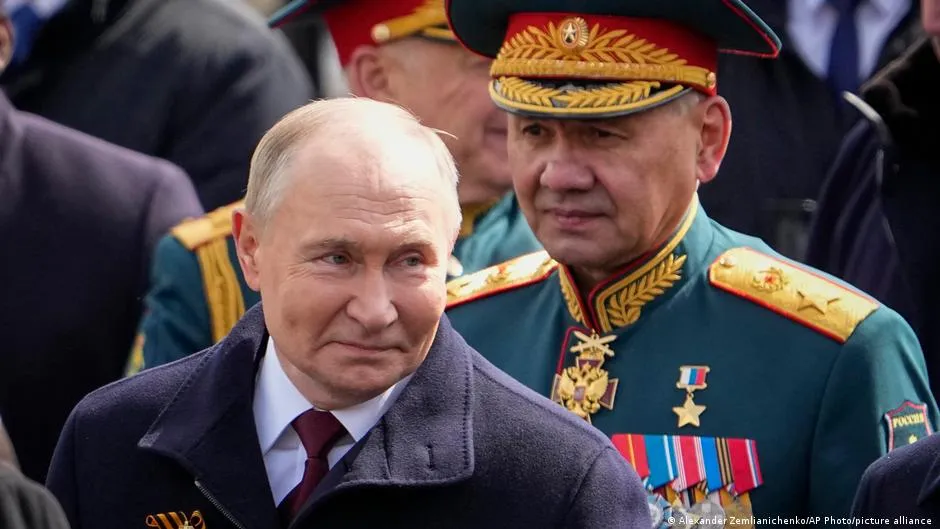
Heightened security measures around Russian President Vladimir Putin and a notable reduction in his public appearances have sparked speculation about a possible coup attempt or assassination plot, according to a report by Deutsche Welle.
Observers have pointed to what they describe as unusual changes in Putin's security arrangements and movement patterns as possible indicators of internal instability within Russia's leadership. The developments come as Russia continues its military campaign in Ukraine, now entering its fourth year.
Signs fueling the theories
Those who believe the threat is credible point to a pattern of behavior consistent with a leader who perceives danger from within his own circle. Reduced public-facing events, tighter controls on who has access to Putin, and apparent changes to his travel and scheduling habits have all been cited as potential warning signs.
The 2023 mutiny led by Wagner Group founder Yevgeny Prigozhin - who died in a plane crash two months later - demonstrated that open challenges to Putin's authority were at least conceivable, lending some weight to ongoing speculation about elite-level dissatisfaction within Russia.
Skeptics push back
Despite the speculation, a number of analysts remain unconvinced that a coup is imminent or even likely. Some experts argue that Putin has spent decades systematically dismantling potential power bases that could rival his own, making a coordinated internal challenge extremely difficult to organize.
Others suggest that the changes in his public schedule may have more mundane explanations, including routine security updates, health considerations, or standard wartime precautions rather than evidence of a specific threat.
Russia's tight control over domestic information also makes it difficult to verify claims about any internal power struggles, and disinformation - from multiple directions - remains a persistent factor in assessing news coming out of Moscow.
Context and uncertainty
Western intelligence agencies have historically struggled to accurately assess internal dynamics within the Kremlin. The opacity of Russia's political system means that even well-sourced analysts are often working with incomplete information.
Deutsche Welle notes that while the increased security measures are observable, the motivations behind them remain unclear, and the gap between visible signs and confirmed threats is significant.
Putin has ruled Russia for more than two decades, consolidating control over the military, intelligence services, and key economic sectors. Whether current speculation reflects a genuine shift in his political footing or amounts to over-interpretation of limited signals remains, for now, an open question.