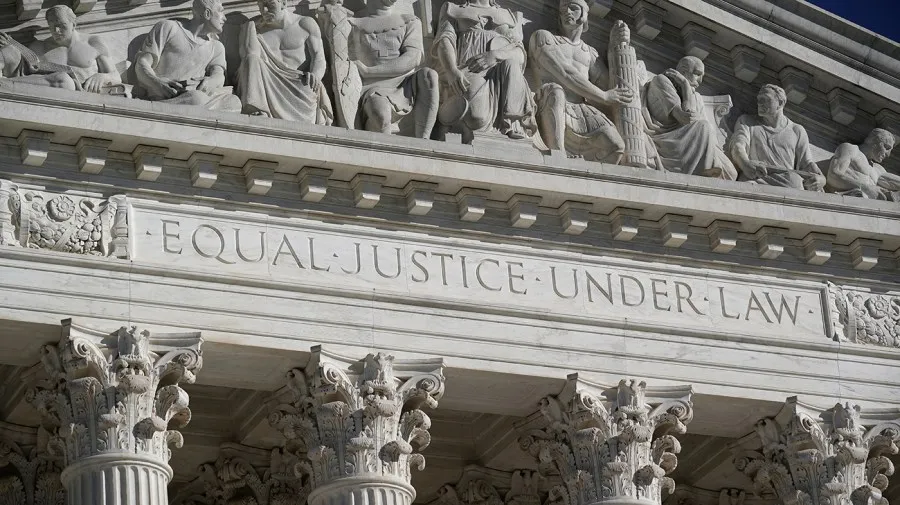
In a move that should surprise absolutely nobody who has been paying attention, the U.S. Supreme Court on Tuesday cleared the way for Alabama Republicans to ditch the state's second majority-Black congressional district ahead of the midterm elections, according to The Hill.
The court - in what appears to be a 6-3 vote along familiar ideological lines - sided with Alabama after the state pushed back against a lower court that had kept its original map blocked. Alabama's argument, essentially, was that the Supreme Court's own prior rulings gave it the green light to move forward with the new configuration, and the justices apparently agreed.
What is actually happening here?
This is the latest chapter in a long-running redistricting saga that has been bouncing around the courts like a pinball. The core issue is whether Alabama's congressional map must include a second district where Black voters make up a majority - or something close to it - given that Black residents account for roughly 27% of the state's population.
A lower court had kept Alabama's map on ice, suggesting the state hadn't done enough to comply with the Voting Rights Act. Alabama, apparently not thrilled with that assessment, went back to the Supreme Court and won the argument that the redistricting process should proceed using their preferred map for the upcoming midterms.

Why does this matter?
It matters quite a bit, actually. The practical effect is that Republicans now have a pickup opportunity in a state that was, until recently, required to maintain a map more favorable to Black voters and - by extension - more likely to send a Democrat to Congress.
Voting rights advocates have argued that diluting majority-Black districts is precisely the kind of thing the Voting Rights Act was designed to prevent. Alabama's Republicans see it differently, and on Tuesday, a majority of the Supreme Court agreed with them - at least for now.
The bigger picture
This ruling does not exist in a vacuum. It comes amid a broader national conversation about redistricting, minority voting rights, and just how much muscle the Voting Rights Act still has after years of court decisions that critics say have hollowed it out considerably.
For Alabama Democrats and civil rights organizations, Tuesday's decision is another frustrating data point in that story. For Alabama Republicans heading into the midterms, it is, to put it bluntly, a gift.
The legal fight is likely far from over, but for the purposes of the next election cycle, the map is cleared to go.