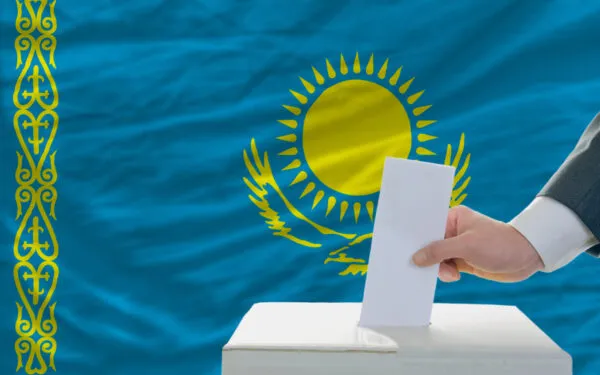
Kazakhstan, the Central Asian nation that has been carefully curating its image as a "reforming" post-Soviet state, has apparently looked at the whole "letting people vote for local officials" experiment and said: "you know what, never mind."
According to a report from The Diplomat, the Kazakh government has reversed course on its earlier push toward direct elections of district-level akims - that is, the governors who run the administrative districts that make up the country's regional structure. It's the kind of policy flip that would make even the most seasoned political spin doctor sweat a little.
Wait, weren't they the good guys?
To understand why this matters, a quick rewind. President Kassym-Jomart Tokayev came to power promising a "New Kazakhstan" - a reformist vision that included, among other things, gradual moves toward greater democratic participation at the local level. Direct elections of akims were held up as a symbol of that political opening, a sign that Kazakhstan was - slowly, carefully, on its own terms - growing up democratically.
The reversal, as The Diplomat frames it, raises an uncomfortable question: if the earlier moves toward direct elections were evidence of the country's political maturation, what exactly does walking them back signal?
Reading between the authoritarian lines
Critics and analysts of Central Asian politics will find this development entirely unsurprising, even if it's still disappointing. Allowing citizens to directly elect local officials sounds great on paper, but it introduces variables that centralized governments tend to find uncomfortable - like unpredictable outcomes, local power bases, and the general chaos of actual democracy.
Kazakhstan remains a country where political power is tightly managed from the top. Tokayev's reform agenda has always been more of a controlled thaw than a genuine opening, and this reversal fits that pattern neatly. The direction of travel, it turns out, was never firmly set toward democracy - it was more of a cautious detour.
The bigger picture
For outside observers and foreign governments hoping Kazakhstan might serve as a model for gradual reform in a tough neighborhood, this is a setback worth noting. Central Asia is not exactly flush with democratic success stories, and any regression - however incremental - chips away at the region's already modest democratic credentials.
As The Diplomat pointedly asks, what should we make of this reversal? At minimum, it suggests the limits of top-down reform in systems where those at the top have the most to lose from genuine democratic competition. Kazakhstan tried a little democracy for its local governments, apparently didn't like what it saw coming, and hit the brakes.
Apparently some experiments are best left in the lab.